
Bulgarian split squats are excellent for building single-leg strength, but they aren’t always comfortable or practical. Fortunately, several effective alternatives can target the quads, glutes, and hamstrings while improving balance and lower-body strength.
Why You Might Need a Bulgarian Split Squat Alternative
The Bulgarian split squat is one of the most effective single-leg exercises for building quad and glute strength, but it is not the right fit for everyone. The rear foot elevated position places heavy demand on ankle mobility, hip stability, and balance all at once. If any one of those breaks down, the exercise stops working the muscles it is meant to target and starts working around a compensation instead.
Common reasons lifters look for a substitute include limited ankle dorsiflexion that forces the torso to lean too far forward, knee discomfort from the deep lunge position, no bench or elevated surface available, or simply needing variety after months of the same movement pattern. None of these are signs of weakness. They are signals to train smarter.
A good alternative should preserve what makes the Bulgarian split squat valuable: unilateral loading, quad and glute recruitment, and a stability challenge that carries over to running, cutting, and everyday movement. It should not just be an easier version that trains a different quality entirely.
What Makes a Strong Substitute Exercise
Before picking a replacement, it helps to know what to check for. A true alternative should hit at least three of the following:
Single-leg or split-stance loading that forces each side to work independently, since bilateral squats let a stronger leg compensate for a weaker one.
A knee-dominant bias similar to the Bulgarian split squat, rather than shifting the load almost entirely to the hips.
A range of motion deep enough to build strength through the bottom position, not just the top half of the movement.
Minimal reliance on a bench, box, or specialized equipment, if the goal is a home-friendly swap.
Manageable balance demands for lifters who found the original version too destabilizing.
Best Bulgarian Split Squat Alternatives
1. Reverse Lunge
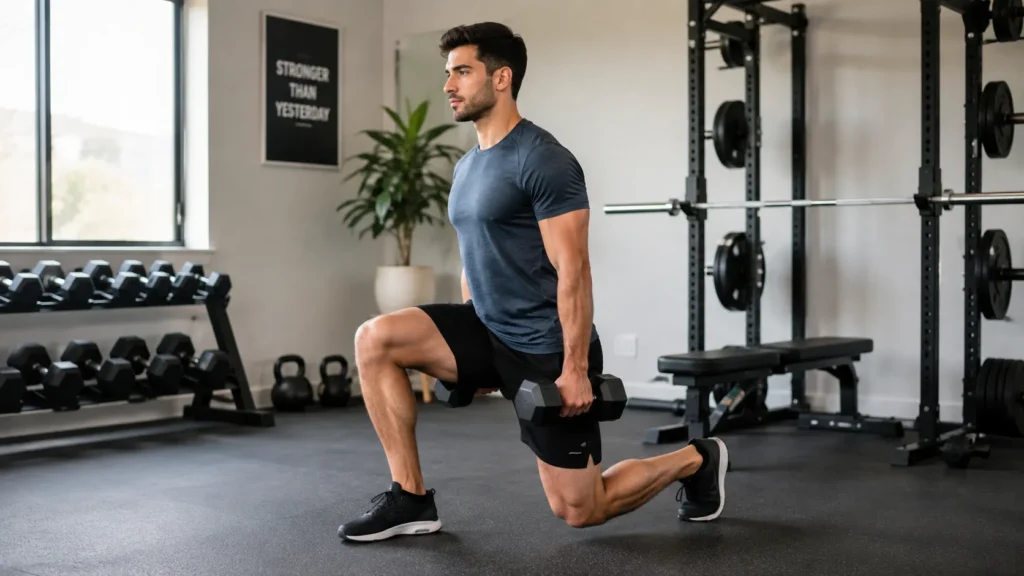
The reverse lunge is the closest match to the Bulgarian split squat in terms of muscle activation and movement pattern, minus the rear foot elevation. Stepping backward instead of forward reduces shear stress on the front knee while still loading the quad and glute through a full range of motion.
Hold a dumbbell in each hand or a single kettlebell at chest height. Step one foot back, lower the rear knee toward the floor, then drive through the front heel to return to standing. Keep the front shin close to vertical throughout the movement.
2. Walking Lunge
Walking lunges add a forward momentum component that the Bulgarian split squat does not have, which makes them useful for athletes who need strength that transfers to sprinting and change of direction. Each step becomes its own single-leg squat, so fatigue accumulates differently than in a stationary exercise.
Keep the torso upright and take a stride long enough that the front knee tracks over the ankle rather than pushing past the toes.
3. Step-Up
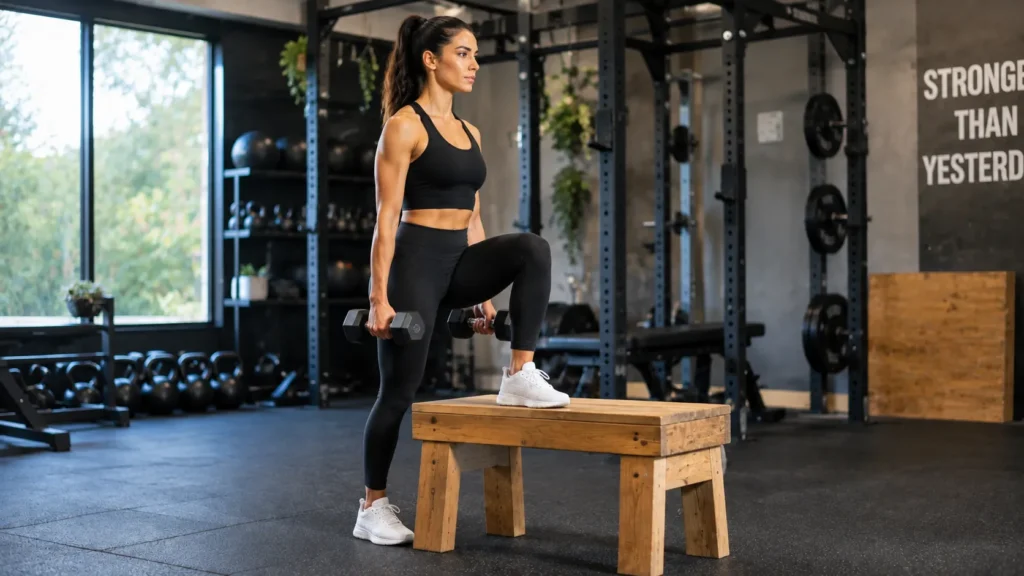
Step-ups isolate the working leg almost completely, since the trailing leg contributes very little to driving the movement. Using a box or bench around knee height, drive through the heel of the elevated foot to stand fully upright, then lower under control.
This variation is particularly useful for people who struggle with balance in the Bulgarian split squat, because the base of support stays stable and directly under the working leg.
4. Curtsy Lunge
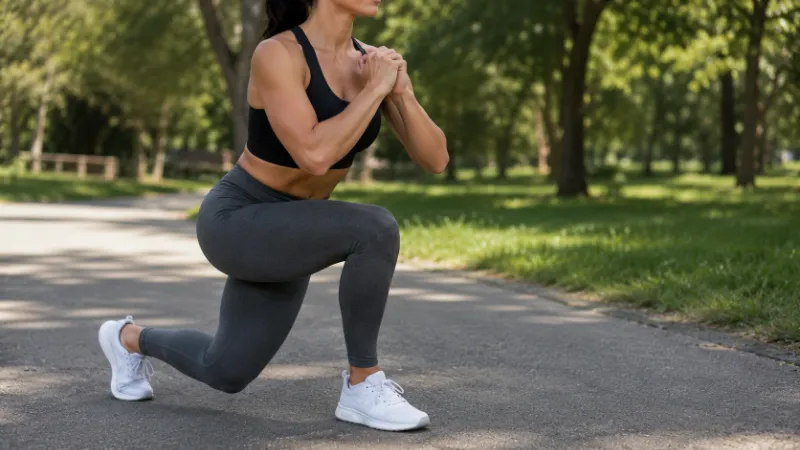
The curtsy lunge crosses one leg behind and to the side of the other, which brings the glute medius and outer hip into play alongside the quad. It is a strong option for runners and field-sport athletes who need hip stability in the frontal plane, something the Bulgarian split squat does not directly train.
Step the working leg diagonally behind the standing leg, bend both knees, and lower until the back knee is close to the floor.
5. Cossack Squat
The Cossack squat trains lateral strength and hip mobility in a way none of the other alternatives on this list do. Standing with a wide stance, shift the weight to one side and squat down on that leg while keeping the opposite leg straight with the foot flat or heel lifted slightly.
This movement is demanding on ankle and hip mobility, so it is worth starting with bodyweight and a slower tempo before adding load.
6. Single-Leg Leg Press
For lifters training in a gym with access to a leg press machine, the single-leg leg press removes the balance component entirely while keeping the unilateral loading. This makes it a strong option during rehab or when fatigue from balancing is limiting how much weight can be used.
Set the seat position so the working knee reaches close to 90 degrees at the bottom, then press through the full foot rather than just the toes.
7. Single-Leg Romanian Deadlift
While this movement shifts the emphasis toward the hamstrings and glutes rather than the quads, it is worth including in a rotation with the exercises above because it trains single-leg balance and posterior chain strength that the Bulgarian split squat does not directly address.
Hinge at the hip while extending the non-working leg straight back, keeping a slight bend in the standing knee and a flat back throughout.
Bulgarian Split Squat Alternatives for Bad Knees
Knee discomfort during the Bulgarian split squat usually comes from excessive forward knee travel or from the deep range of motion itself. If that describes your experience, the step-up and single-leg leg press are the safest starting points, since both allow the range of motion to be controlled precisely.

Reducing depth on the reverse lunge is also an effective adjustment. Stopping the descent a few inches short of a full range still builds strength while keeping stress on the knee joint manageable. As strength and comfort improve, depth can be added back gradually.
Anyone with persistent or sharp knee pain, rather than general soreness from a new exercise, should get it evaluated before continuing to train through it.
Bulgarian Split Squat Alternatives Without Equipment
Training at home without dumbbells or a bench still leaves several strong options. Bodyweight reverse lunges, walking lunges, and curtsy lunges all build meaningful strength on their own, especially when performed for higher reps or with a slower eccentric phase.
Adding a pause at the bottom of each rep, for two to three seconds, increases time under tension significantly without needing any added load. This is one of the most underused tools for making bodyweight single-leg work genuinely challenging
How to Program These Alternatives Into Your Routine
Most lifters get the best results by rotating between two or three of these movements rather than sticking to just one. A simple approach is to pair a knee-dominant option, like the reverse lunge or step-up, with a movement that adds a different demand, such as the Cossack squat for lateral strength or the single-leg Romanian deadlift for the posterior chain.
For strength-focused training, 3 to 4 sets of 6 to 10 reps per leg works well. For muscle growth or general conditioning, 3 sets of 10 to 15 reps per leg allows enough volume to drive adaptation without excessive joint stress.