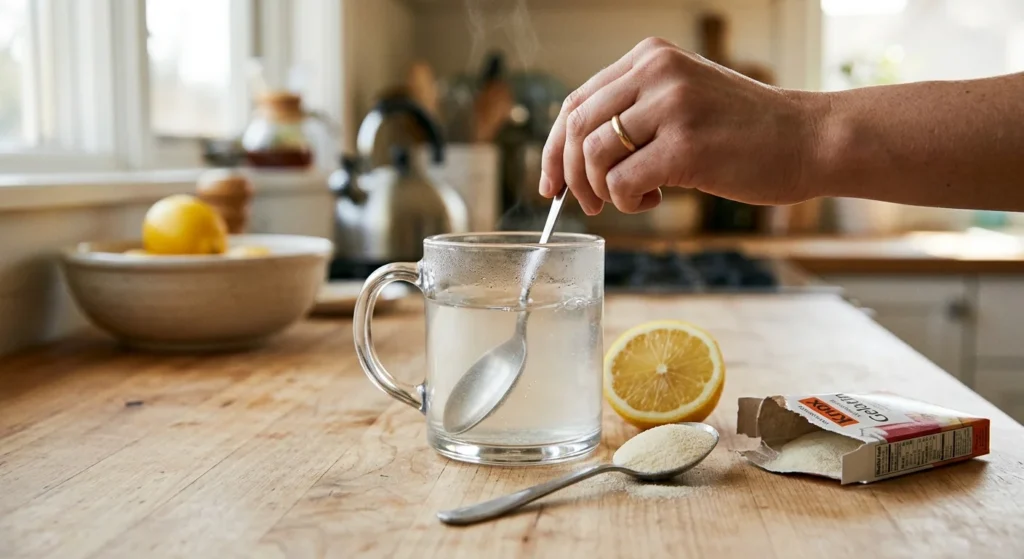

What is the gelatin weight loss recipe? It is a warm drink made by dissolving about 1 tablespoon of unflavored gelatin powder in 1 cup of hot water, usually sipped 15 to 30 minutes before a meal. People use it because gelatin is almost pure protein, and protein tends to make you feel full. The catch is that feeling full for a couple of hours is different from losing weight over months, and the research does not show that the second follows from the first.
The recipe spread fast on social media, where it goes by names like the gelatin trick and the gelatin diet. A July 2026 review from GoodRx Health, written by nutritionist Lindsay Boyers, CHNC, and medically reviewed by Katie E. Golden, MD, describes it as a trend with a plausible mechanism and very little proof of results. This guide covers the exact recipe, how gelatin differs from Jell-O and collagen powder, what the studies found, and who should skip it.
Why the Gelatin Trend Took Off
Weight loss advice that costs a few cents and takes 30 seconds to prepare is easy to share. A packet of plain gelatin, the kind sold near the baking and dessert aisle in most US grocery stores, is cheap, shelf-stable, and already in many kitchens.
The pitch is also simple: drink it before you eat, feel full, eat less, lose weight. Each link in that chain gets weaker as you move along it, which is what the rest of this article tests.
The Basic Gelatin Weight Loss Recipe
There is no official version, but most recipes online use the same few parts, according to GoodRx Health.
- 1 tablespoon of unflavored gelatin powder
- 1 cup of hot water
- A splash of lemon juice, which is optional
How to Make It
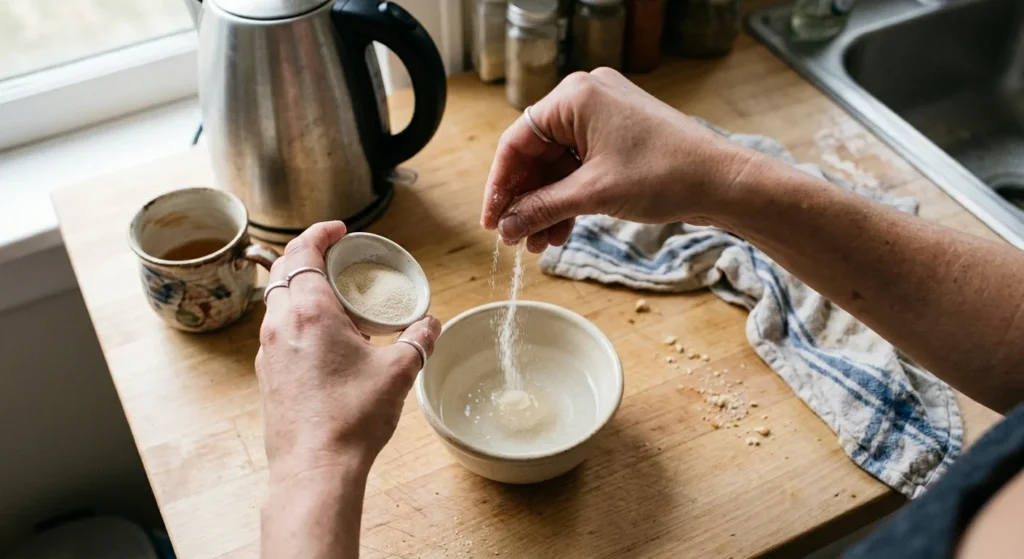
Sprinkle the powder over a splash of cold water and let it sit for a minute so it softens. Pour in the hot water and stir until no grains are left, then drink it while it is still warm. Check your package for its own directions, since brands differ slightly.
If you see lumps, the water was not hot enough, or the powder went in all at once. Stir for another 30 seconds, or microwave the cup for 10 seconds and stir again.
People usually drink it first thing in the morning or 15 to 30 minutes before a meal. GoodRx notes that the taste is mild and often described as broth-like, so the lemon is mostly there to make it more pleasant.
Common Variations
Because nothing is standardized, versions multiply. Some people stir the powder into hot coffee, hot tea, or hot lemon water. Others add apple cider vinegar or collagen powder.
A third group chills the gelatin and water until it sets, then eats it with a spoon as a snack. That version gives you something to chew, which some people find more satisfying than a drink.
None of the sources reviewed for this article show that any add-in improves results. Treat apple cider vinegar, collagen, and flavorings as taste choices, not upgrades.
Gelatin, Jell-O, and Collagen Powder Compared
These three products get mixed up constantly, and the difference changes both the recipe and the calories.
| Product | What It Is | Fits the Recipe? |
| Unflavored gelatin | Protein from cooked collagen, with no sugar or flavor | Yes, this is the standard choice |
| Flavored gelatin dessert mix | Gelatin plus flavoring and sugar or artificial sweetener | Only if you accept the added calories or sweeteners |
| Collagen powder | Collagen broken down further so it dissolves in cold liquid | Not the same product, and it does not set like gelatin |
GoodRx explains that gelatin comes from collagen found in animal skin, bones, and connective tissue, typically from cows or pigs. When collagen is cooked and broken down, it becomes gelatin. Read the label before you buy, because some gelatin products contain sugar, calories, or artificial sweeteners that people trying to cut back may not want.
What Gelatin Is Supposed to Do for Weight Loss
The theory rests on two claims: gelatin keeps you full, and it helps you burn more fat. Each one deserves its own look.
1. Fullness: Likely True for a Short Time
Gelatin is made almost entirely of protein, and protein tends to increase fullness after a meal. GoodRx reports that in studies where people had gelatin before eating, they felt more full afterward. In one study, gelatin raised fullness more than some other protein sources.
The important word is afterward. Most of those studies measured effects over a few hours, not weeks or months.
2. Calorie Intake: Maybe
Feeling full could lead to eating less, but it does not have to. Some people eat more later in the day, which can cancel out any savings from the earlier meal.
GoodRx concludes that gelatin may help some people eat less at a particular meal, but there is no evidence that it produces meaningful or sustained weight loss.
3. Fat Burning: Little Support
Your body spends slightly more energy digesting protein than it does digesting carbohydrates or fat, a process known as the thermic effect of food. Gelatin is not special in this regard, because other protein-rich foods do the same thing.
That small bump in calorie burn is unlikely to change your weight on its own. Nothing in the sources reviewed shows that gelatin burns fat, targets belly fat, or speeds up fat loss, despite what social media posts claim.

What the Research Says About Gelatin and Weight
The studies people cite most often come from a team led by Annemarie Hochstenbach-Waelen. A 2009 paper in The Journal of Nutrition compared single-protein diets built on casein or gelatin. It found that the two affected energy expenditure similarly, while appetite and the mix of fuel the body burned differed.
A 2010 follow-up in Physiology & Behavior, titled “No long-term weight maintenance effects of gelatin in a supra-sustained protein diet,” did not find a lasting weight benefit. Both studies looked at whole diets built around a protein, not a single tablespoon of gelatin stirred into a cup before meals.
Read together, the research supports the fullness claim and does not support the long-term weight claim. That is the same split GoodRx reaches.
There is a gap worth naming. The fair test of the viral recipe would compare gelatin water against plain warm water or broth of the same volume, because liquid adds fullness on its own. The sources reviewed here do not report that comparison.
A Katie Couric Media explainer adds a practical warning. It quotes a dietitian named Taylor, who says using gelatin to override hunger can interfere with your normal hunger and fullness cues, and who recommends talking to a doctor before starting any weight loss trend.
Gelatin Nutrition Facts per Tablespoon
According to MyFoodData, which GoodRx cites, 1 tablespoon (12 grams) of unflavored gelatin powder has 40 calories and 11 grams of protein. It has no fat, carbohydrates, or fiber, and 35 milligrams of sodium, or about 1% of the daily value.
Forty calories is a very small number, so the calories are not the point. People are counting on the protein and the volume of warm liquid to take the edge off hunger before a meal.
When to Drink It for the Best Chance of Working
No study tells you the ideal time, so this part is judgment. Because the fullness effect shows up over a few hours, the logical place for the drink is 15 to 30 minutes before the meal where you are most likely to overeat.
For many people, that is dinner, or a mid-afternoon snack that tends to turn into a second lunch. Drinking it first thing in the morning, as some recipes suggest, only helps if breakfast is your trouble spot.
Skip the habit of drinking it in place of a meal. That is where most of the nutritional downsides begin.
Common Mistakes When Making the Gelatin Drink
Most problems come from small kitchen errors, not the recipe itself. Gelatin starts to set as it cools, so a cup left sitting on the counter turns into a thick, rubbery sludge. Make it, then drink it.
Using more powder than the recipe calls for has the same effect. Extra gelatin does not add extra fullness in any way the research has shown, and it makes the texture worse.
Grabbing a box of flavored dessert mix is another common slip. The label may look similar, but the sugar or sweeteners change the calories. And treating the drink as permission to eat a bigger meal afterward defeats the purpose.
Downsides and Who Should Skip It
Gelatin is generally safe for most people, and drinking it occasionally is unlikely to cause harm, according to GoodRx. The trouble comes from how some people use it.
- It can push out real food. When the drink replaces a meal or snack, you lose fiber, vitamins, minerals, and other nutrients along with the calories.
- It is an incomplete protein. Gelatin does not supply all nine essential amino acids, so it should not stand in for eggs, dairy, fish, poultry, soy foods, or quinoa.
- It is not vegetarian or vegan, since it comes from animal collagen.
- Flavored versions can contain sugar, extra calories, or artificial sweeteners.
- It can blur hunger cues. Ignoring hunger can make cravings and overeating more likely later, GoodRx warns.
Anyone with a history of disordered eating should be especially careful with appetite suppression routines. Calorie cutting can contribute to disordered eating, and a routine built around ignoring hunger is a poor fit.
Check with a doctor or registered dietitian before starting, especially if you are pregnant, take medication, or manage a health condition such as diabetes.
How to Test the Recipe Without Fooling Yourself
If you still want to try it, run a short, honest experiment instead of trusting a viral video.
Pick two weeks. In week one, drink a cup of warm water or broth before your largest meals. In week two, swap in the gelatin drink. Keep everything else the same.
Before each meal, rate your hunger from 1 to 10. After it, jot down roughly how much you ate and whether you snacked within two hours.
If the gelatin week looks no different from the warm water week, the protein is not doing anything the liquid was not. You will have learned that for the price of one box of gelatin.

Also watch the rest of the day. GoodRx points out that people sometimes eat more later, which can erase the benefit of one lighter meal.
What Works Better for Lasting Weight Loss
GoodRx points to balanced meals, regular physical activity, adequate sleep, and lower stress as habits that matter far more than any single food or drink.
Whole foods can do the same fullness job gelatin does, with a complete set of amino acids. GoodRx lists eggs, tuna, and legumes as high-protein foods that can curb cravings and help preserve muscle during weight loss.
Calorie needs vary widely. The Dietary Guidelines for Americans 2020 to 2025 from the US Department of Agriculture put most adults between 1,600 and 3,200 calories a day, depending on age and activity level. A dietitian can narrow that range for you, which beats guessing.
Is the Gelatin Weight Loss Recipe Worth Trying
If you like warm drinks, tolerate gelatin well, and treat it as one small habit, the gelatin weight loss recipe costs little and is unlikely to hurt you. If you expect it to melt fat, it will disappoint you.
This article is for general information and is not medical advice. Talk with a qualified clinician before changing your diet, especially if you have a health condition or take medication.