
If your chest looks flat up near the collarbone no matter how much you bench, the problem usually isn’t effort. It’s exercise selection. Upper chest exercises need to load the clavicular head of the pectoralis major at the specific angle its fibers actually run, and a flat bench press barely touches that region. Below are the movements that do, why they work, and how to program them so the upper chest finally catches up with the rest of your pecs.
Why the Upper Chest Lags Behind
The pectoralis major has two heads. The sternal head covers most of the middle and lower chest and gets plenty of stimulation from flat pressing. The clavicular head, which sits along the collarbone, only fires strongly when the arm moves upward and across the body at a diagonal. Most lifters build their entire chest routine around flat and slightly-incline barbell pressing, so the clavicular fibers never get a dedicated stimulus. Over months and years, that gap becomes visible as a flat, square-looking upper chest instead of a full, sloped one.
The clavicular head is also innervated somewhat separately from the rest of the pec, which is part of why it responds better to exercises built specifically around its fiber direction rather than generic pressing.
The Angle That Actually Targets the Upper Chest
The clavicular fibers run diagonally, from the collarbone down toward the upper arm. To load them effectively, the resistance needs to pull the arm downward and away from that diagonal line, forcing the upper chest to fight against it. That’s why an incline press works better than a flat press for this region, and why a low-to-high cable movement recruits the upper chest even more directly than a dumbbell press does.
A 30 to 45 degree bench angle is the sweet spot. Go steeper than that and the front deltoids take over most of the work, which is the single most common reason people feel incline pressing “in their shoulders” instead of their chest.
The Best Upper Chest Exercises
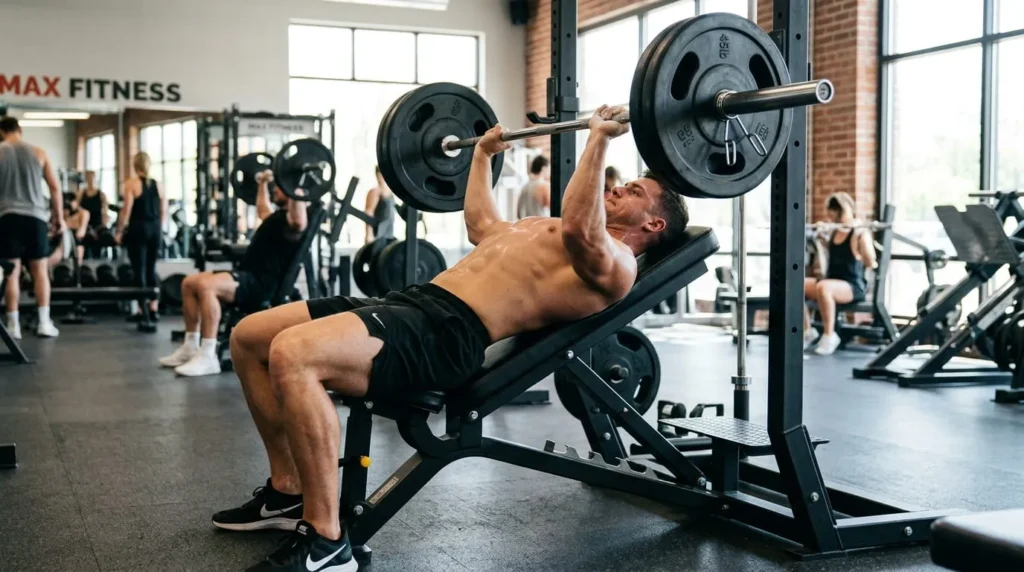
1: Incline Barbell Bench Press
This is still the best mass builder for the upper chest because it allows the heaviest loading. Set the bench to 30 degrees, not 45. Lower the bar to the top of your chest, just below the collarbone, and keep your elbows at roughly a 45 degree angle from your torso rather than flared straight out. Flaring the elbows shifts stress into the front delts and shoulder joint.
2: Incline Dumbbell Press
Dumbbells let each arm move through its own natural path, which increases upper chest activation compared to a fixed barbell path and reduces strain on the shoulders. Press the dumbbells up and slightly inward so they nearly touch at the top, which keeps tension on the chest instead of letting the triceps and shoulders take over the last few inches.
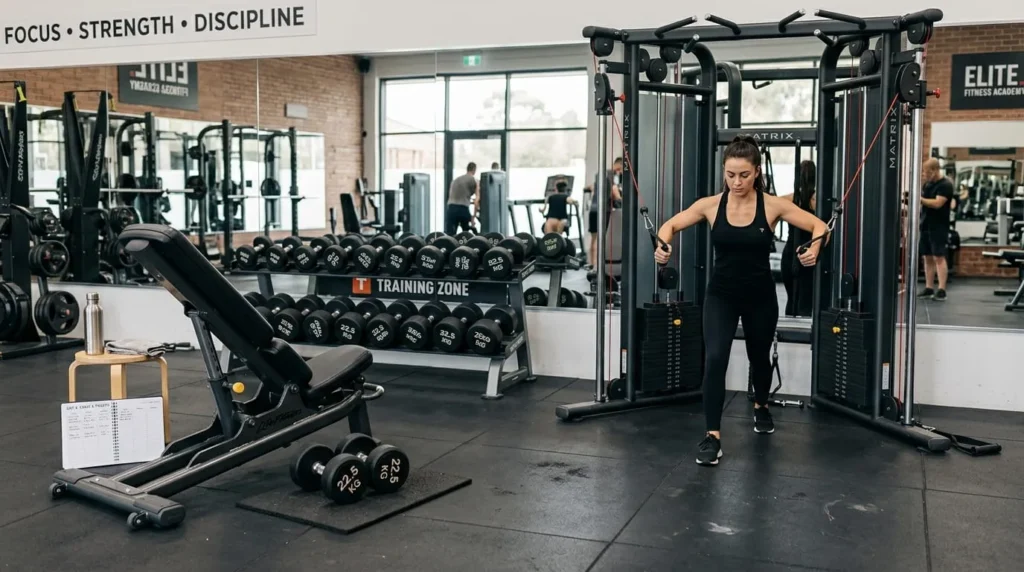
3: Low-to-High Cable Crossover
This is the exercise that most directly matches the clavicular fiber direction. Set both pulleys at the lowest position, step forward, and bring the handles up and across your body in an arc that finishes near shoulder height. Because the cable pulls downward throughout the entire range, the upper chest stays under tension in a way that dumbbells can’t replicate.

4: Incline Dumbbell Fly
Flyes isolate the chest without much triceps or shoulder assistance, which makes them useful for feeling the upper chest work directly once you understand the movement pattern. Keep a slight bend in the elbows throughout and lower the dumbbells until you feel a stretch across the upper chest, not the front of the shoulder. Stopping the descent as soon as you feel shoulder strain protects the joint.
5: Landmine Press
The landmine’s fixed pivot point creates a natural upward and inward pressing arc that closely follows the clavicular fiber line. It’s also easier on the shoulders than a barbell incline press, which makes it a strong option if you feel joint discomfort with heavier incline pressing. Stand or kneel, press the bar up and slightly across your body, and control the descent.
6: Reverse-Grip Flat Bench Press
Flipping your grip so your palms face you changes your elbow position during the press, which shifts more emphasis onto the upper chest even on a flat bench. Use lighter weight than your standard bench press until you’re comfortable with the grip, and keep your wrists straight to avoid unnecessary strain.
7: Incline Push-Up
For home workouts or as a finisher, elevate your hands on a bench, box, or sturdy chair and perform push-ups with your body in a straight line. The higher your hands relative to your feet, the more the movement shifts toward chest engagement rather than shoulder-dominant pressing, which is the opposite of a decline push-up.
A Sample Upper Chest Workout
Pair two to three of these exercises per session rather than trying to do all seven at once. Loading the same fiber group with too much volume in a single workout increases joint fatigue without adding extra growth stimulus.
A solid session looks like this: incline barbell bench press for 4 sets of 6 to 8 reps, incline dumbbell press for 3 sets of 8 to 10 reps, and low-to-high cable crossover for 3 sets of 12 to 15 reps. Start with the heaviest compound movement while you’re fresh, then move to lighter, more isolated work.
How Often to Train Upper Chest
Twice a week is enough for most lifters, with at least 48 hours between sessions to let the fibers recover. Training upper chest more often than that without adjusting total volume usually leads to stalled progress rather than faster growth, since the clavicular fibers are still working hard during flat pressing and other push exercises earlier in the week.
Common Mistakes That Stall Upper Chest Growth
Setting the incline bench too steep is the most frequent error. Past 45 degrees, the exercise starts to resemble a shoulder press more than a chest press, and the front deltoids absorb most of the load. A close second is flaring the elbows out to 90 degrees during pressing movements, which again redirects stress to the shoulder joint instead of the chest.

Many lifters also skip the low-to-high cable crossover entirely because it uses less weight than pressing movements and feels less impressive. That’s a mistake, since the cable pull direction matches the clavicular fiber line more closely than any pressing angle can. Underestimating a lighter exercise because the weight looks small often means missing the movement that actually targets the muscle correctly.