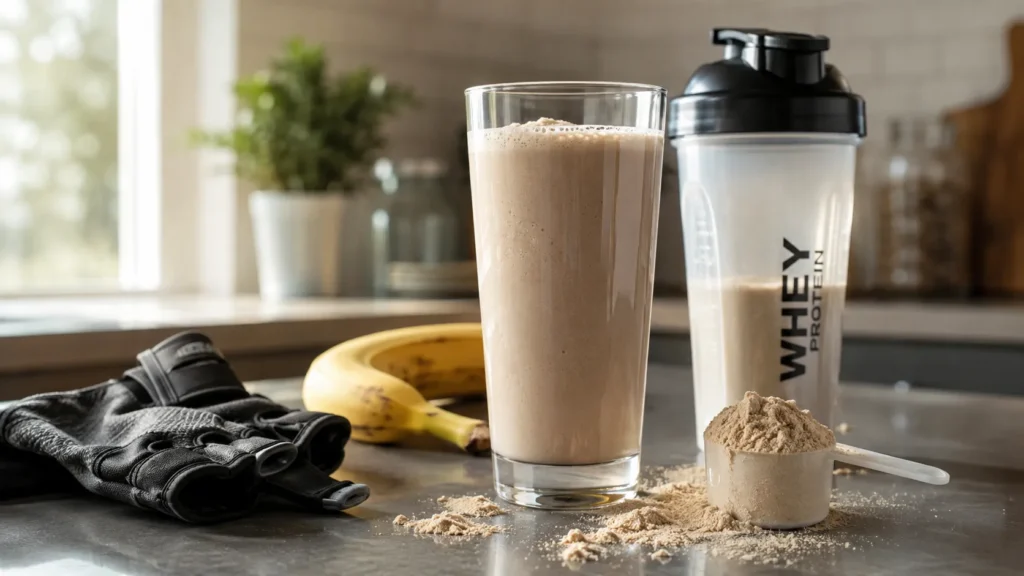

A post-workout protein shake gives your muscles the raw material they need to repair and grow after you have already done the hard part in the gym. Most people get the general idea right: protein after training helps recovery, but they get the details wrong. Wrong protein amount, wrong ratio of carbs to protein, wrong timing, or a shake that is really just a dessert with a scoop of powder mixed in.
This guide breaks down exactly what a good post-workout protein shake looks like, how much protein you actually need, which ingredients matter, and when to drink it for the best results.
Why Protein Timing After a Workout Matters
When you train with resistance, whether that is weightlifting, sprinting, or heavy bodyweight work, you create small tears in your muscle fibers. Your body repairs those fibers using amino acids from protein, and that repair process is what makes muscles bigger and stronger over time.
For years, fitness marketing pushed the idea of a strict 30-minute anabolic window right after training. That window is real but far wider than people were told. Research on protein timing shows the effective window stretches to roughly two hours after exercise, and total daily protein intake matters more than hitting an exact minute mark. Still, drinking a shake shortly after your session is a simple, reliable way to make sure you are not skipping that recovery period, especially if your next full meal is hours away.
If you already eat a protein-rich meal within an hour or two of training, a shake is not mandatory. It becomes most useful when your schedule does not allow for a real meal soon after you finish.
How Much Protein Do You Actually Need After Training
A single post-workout protein shake should contain somewhere between 20 and 40 grams of protein, depending on your body weight and training goals.
Smaller individuals or those training primarily for endurance can stay closer to 20 to 25 grams. Larger athletes, or anyone doing heavy resistance training to build muscle, benefit from 30 to 40 grams. Going far beyond 40 grams in a single shake does not meaningfully speed up recovery, since your body can only use so much protein for muscle repair at once. The excess just gets used for energy or stored.
What matters more than any single shake is your total daily protein intake. Most people building muscle should aim for roughly 0.7 to 1 gram of protein per pound of body weight spread across the day. The post-workout shake is one piece of that total, not a replacement for eating enough protein overall.
Best Ingredients for a Post-Workout Protein Shake
1. Protein Powder Options
Whey protein isolate or concentrate is the most common choice because it digests quickly and contains all nine essential amino acids, including a high amount of leucine, which directly triggers muscle protein synthesis. Whey is the standard recommendation for anyone without a dairy sensitivity.
Casein protein digests much more slowly, which makes it a better fit for nighttime recovery than immediately after a workout, when you want amino acids to reach your muscles fast.
Plant-based blends, usually a mix of pea and rice protein, work well for anyone avoiding dairy. A single plant protein source often falls short on one or more essential amino acids, so a blend is important to get a complete amino acid profile close to what whey provides.
2. Carbohydrates You Should Add
Carbohydrates after training refill glycogen, the stored fuel your muscles burned during exercise. A small amount of fast-digesting carbohydrate, such as a banana, honey, or oats, also raises insulin slightly, which helps shuttle amino acids into muscle cells more efficiently.
A useful starting ratio is roughly two to three grams of carbohydrate for every gram of protein if your main goal is muscle growth or you trained for over an hour. If your main goal is fat loss, you can keep the carbohydrate portion smaller and lean more on protein alone.
3. Fats and Other Add-Ins
Fat is not necessary in a post-workout shake and can actually slow digestion, which delays how fast your body absorbs the protein and carbohydrates. If you do add a fat source like peanut butter or flaxseed, keep the portion small, no more than a tablespoon, so it does not blunt absorption.
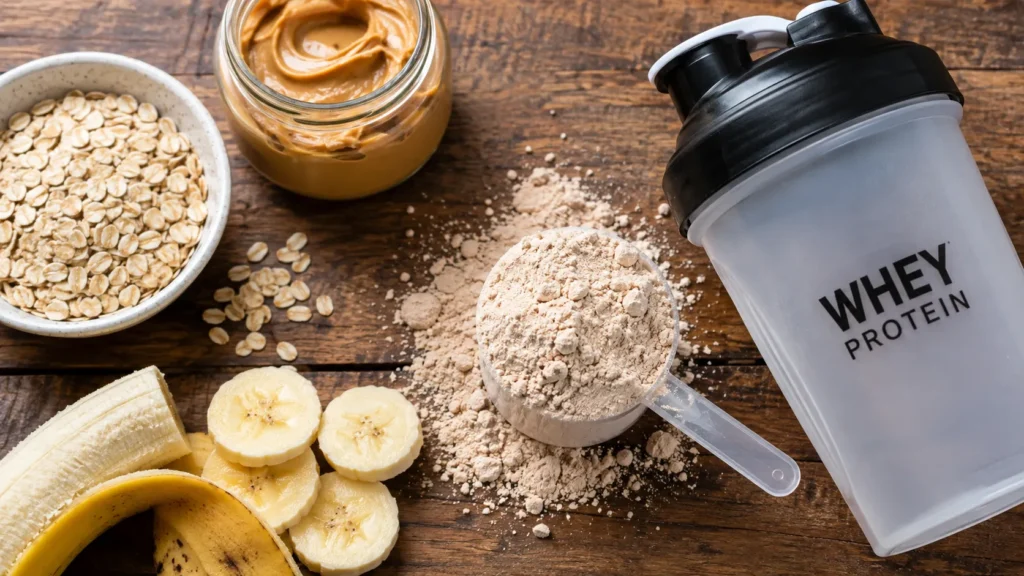
Other useful add-ins include creatine monohydrate, which has strong research support for muscle and strength gains and mixes easily into any shake, and a pinch of salt if you sweat heavily, since it helps with fluid and electrolyte replacement.
Whey vs Plant-Based Protein for Post Workout Recovery
Whey protein has a slight edge for post-workout recovery because it digests faster and has a higher leucine content, the amino acid most directly responsible for switching on muscle protein synthesis. If your only goal is maximizing muscle repair speed and you have no dietary restrictions, whey is the better default.
Plant-based protein is not far behind when you choose a quality blend rather than a single source. Pea and rice protein together closely match whey’s amino acid profile, and studies comparing the two for muscle gains over 8 to 12 weeks have found similar results when total protein intake is equal. The real difference is convenience and taste preference more than performance for most recreational lifters.
If you are vegan, lactose intolerant, or simply prefer to avoid dairy, a well-formulated plant blend is a fully valid choice, and you should not feel you are giving up meaningful gains.
Simple Post Workout Protein Shake Recipes
1. Basic Whey Recovery Shake
One scoop of whey protein isolate, one cup of unsweetened almond milk or water, one banana, and a handful of ice. Blend until smooth. This gives roughly 25 to 30 grams of protein and about 35 grams of carbohydrate, a solid ratio for general strength training.
2. Dairy-Free Recovery Shake
One scoop of pea and rice protein blend, one cup of oat milk, half a cup of frozen mango, and a tablespoon of chia seeds. This delivers around 25 grams of protein along with fiber and slow-digesting carbohydrates for sustained energy.
3. High-Calorie Mass Gain Shake
Two scoops of whey protein, one cup of whole milk, one banana, a third of a cup of rolled oats, and a tablespoon of peanut butter. This version pushes past 45 grams of protein and adds significant calories, useful for anyone in a deliberate muscle-building phase who struggles to eat enough through regular meals.
When Should You Drink It
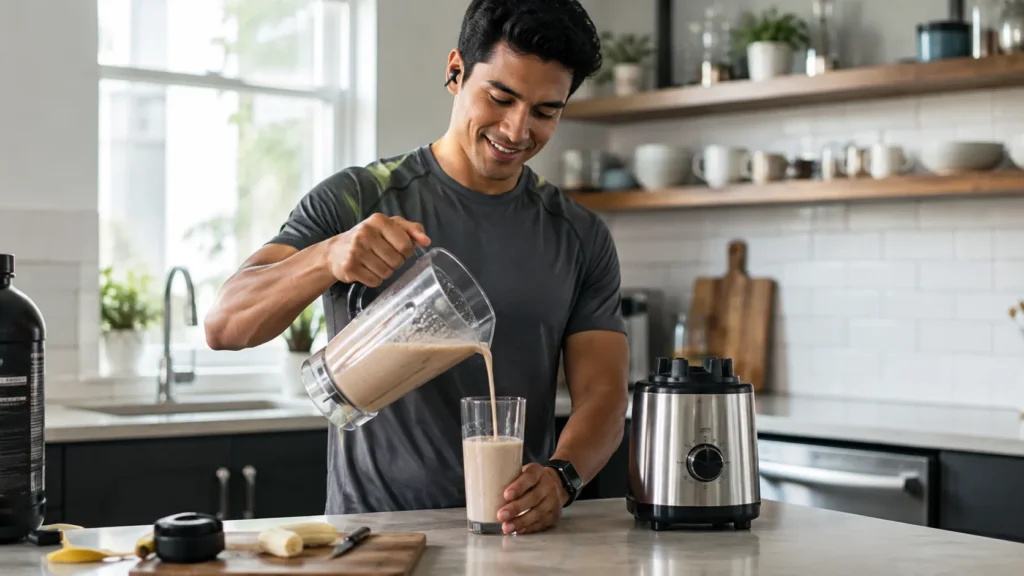
Aim to drink your shake within one to two hours after finishing your workout. This is a wide enough window that you do not need to rush to the locker room with a shaker bottle the second you rack the weights.
If you trained fasted, meaning you had no food beforehand, moving closer to the earlier end of that window is a reasonable precaution, since your body has had less recent protein and carbohydrate to work with. If you ate a full meal one to two hours before training, you have more flexibility and can wait longer after your session before your shake or next meal.
Common Mistakes People Make With Post Workout Shakes
Treating the shake like a meal replacement is one of the most frequent errors. A shake with 25 grams of protein and a banana is not equivalent to a real meal with vegetables, fiber, and a broader range of micronutrients. Use it to supplement your recovery, not to skip eating real food for the rest of the day.
Another common mistake is loading the shake with high-sugar additions like flavored syrups, ice cream, or large amounts of juice. This turns a functional recovery drink into a high-calorie dessert that can work against fat loss goals without adding meaningful recovery benefit beyond what a smaller amount of natural carbohydrate would provide.
Skipping the shake entirely because you are “not hungry” right after training is also common, but appetite suppression after intense exercise is normal and temporary. A liquid shake is far easier to get down than solid food when your appetite is low, which is part of why shakes are popular for this specific window.
Store-Bought vs Homemade Shakes
Pre-made bottled protein shakes are convenient and useful when you are traveling or do not have access to a blender, but they often cost two to three times more per gram of protein than mixing your own. Many pre-made versions also include added sugars or artificial sweeteners in higher amounts than you would choose to add yourself.
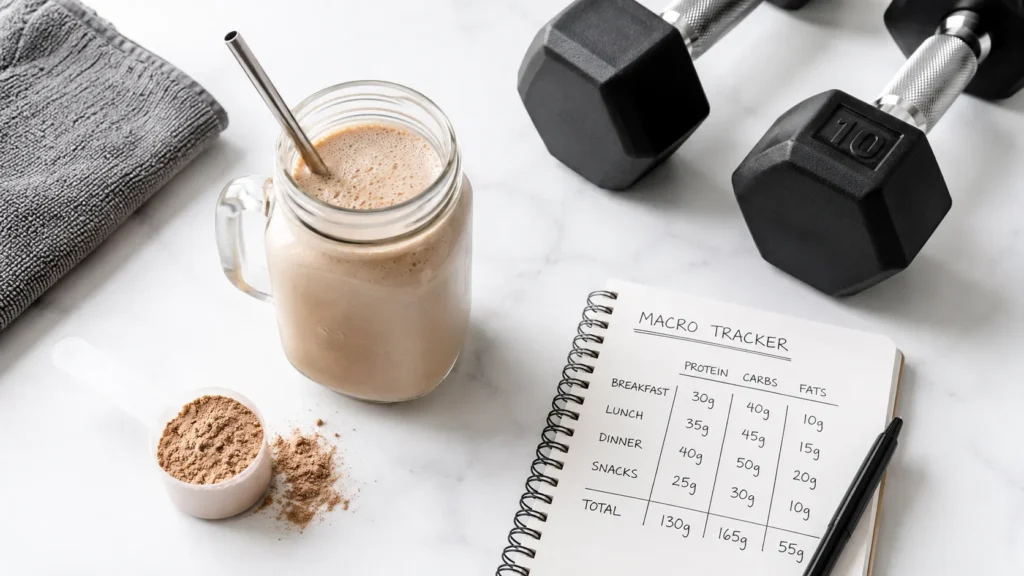
Homemade shakes give you full control over protein amount, carbohydrate ratio, and ingredient quality, and they are almost always cheaper per serving. If convenience is your main concern, a simple shaker bottle with a scoop of powder and water takes under a minute and closes most of the gap with a bottled option.