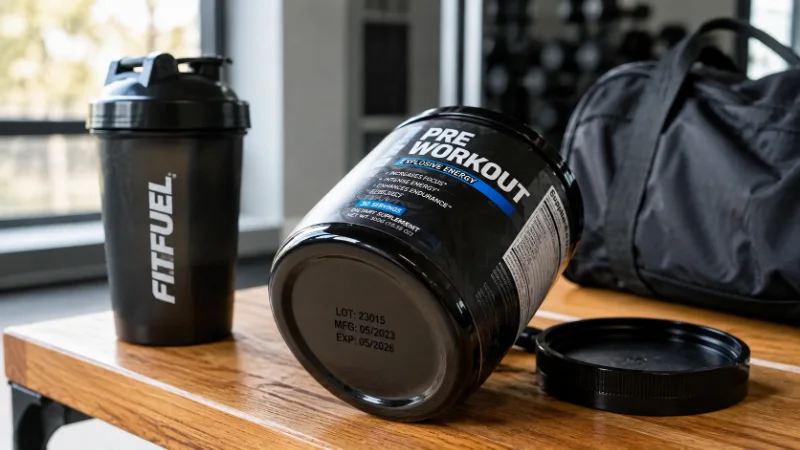

Pre-workout supplements do expire, though the process looks different from food going bad. Most pre-workout powders carry a shelf life of two to three years from the manufacture date, and that date is stamped somewhere on the tub or box, usually near the bottom or back label. Once that window closes, the product does not become dangerous overnight, but its performance starts to slide in ways that matter to anyone chasing a specific training effect.
Understanding what actually happens inside that tub after expiration helps you decide whether to toss it, use it anyway, or stock differently going forward.
How Long Does Pre-Workout Actually Last?
Unopened pre-workout in its original sealed container typically lasts the full length printed on the label, usually 24 to 36 months from production. Powder formulas tend to hold up longer than ready-to-drink liquids or single-serve packets, because moisture is the main enemy and a sealed powder tub keeps humidity out far better than a can of liquid concentrate.
Once you break the seal, the clock changes. An opened tub of pre-workout is generally good for about six months to a year, even if the printed expiration date is still two years away. Every scoop you take introduces a small amount of air and ambient moisture into the container, and repeated exposure gradually degrades the more sensitive ingredients.
Liquid and ready-to-drink pre-workouts behave differently again. These typically expire faster than powders, often within 12 to 18 months of opening, because liquid environments accelerate the breakdown of active compounds and make bacterial growth possible if the product isn’t refrigerated after opening, as some labels require.
What Actually Degrades in Expired Pre Workout
Pre-workout formulas are a mix of ingredients that age at very different rates, which is why “expired” doesn’t mean “identical to spoiled milk.”
1. Caffeine Loses Potency Slowly
Caffeine anhydrous is one of the most stable compounds in a typical formula. It resists heat and light better than most other actives, so a pre-workout that’s a few months past its date usually still delivers a noticeable kick, just a slightly weaker one than day one. Caffeine doesn’t become harmful with age; it simply becomes less effective, which is why some people genuinely don’t notice a difference using a product that’s mildly expired.
2. Beta-Alanine and Citrulline Break Down Faster
Beta-alanine, citrulline malate, and other amino-acid-based ingredients are more sensitive to moisture and oxidation. These are the compounds responsible for the muscle pump and endurance benefits many people take pre-workout for in the first place. As they degrade, the “pump” effect fades well before the caffeine kick does, which explains a common complaint: “my pre-workout still wakes me up but doesn’t hit as it used to.”
3. Flavoring and Sweeteners Change First
Artificial sweeteners and flavor compounds are usually the first thing to noticeably shift. A pre-workout that tastes flat, chalky, or oddly bitter compared to when you first bought it is often signaling early-stage degradation, even before the active ingredients have meaningfully dropped off.

Signs Your Pre Workout Has Gone Bad
Reading the date on the label is the most reliable check, but the product itself usually tells you something is off before you even look.
Clumping is the clearest visual sign. Pre-workout powder should pour and scoop smoothly. If it’s forming hard chunks or a solid brick at the bottom of the tub, moisture has gotten in, and the powder has started absorbing humidity from the air, which speeds up ingredient breakdown.
A noticeable color shift is another red flag, particularly in flavored or dyed products. Bright reds fading to brown, or greens dulling toward gray, usually point to oxidation of the coloring agents and, by extension, everything else in the mix.
Smell changes matter too. A sour, musty, or “off” odor that wasn’t there when you first opened the tub suggests moisture contamination or, in rare cases, mold growth if the product was stored somewhere humid, like a bathroom cabinet or a gym bag left in a hot car.
Reduced effect during your workout is the functional sign, even if the powder still looks and smells fine. If your usual scoop stopped giving you the same pump, focus, or energy it used to, ingredient potency has likely dropped even without visible warning signs.
Is It Safe to Use Expired Pre Workout?
In most cases, using pre-workout a few months past its expiration date won’t make you sick. Dietary supplements aren’t governed by the same strict expiration standards as prescription medication, and the date on the label is more of a potency guarantee from the manufacturer than a hard safety cutoff.
That said, safety depends heavily on how the product was stored and how far past the date it is.
1. When Expired Pre Workout Is Probably Fine
If the tub was kept sealed, stored in a cool, dry place, and is only a few weeks to a couple of months past the printed date, the main risk is reduced effectiveness rather than any health concern. You’ll likely just get a weaker pump and less focus than the label promises.
2. When You Should Throw It Out
Discard pre-workout, regardless of the printed date, if you notice mold, a strong sour or chemical smell, insects, or any sign of moisture contamination inside the container. Liquid pre-workouts that have been opened and left unrefrigerated past the manufacturer’s window should also be discarded, since bacterial growth becomes a real possibility in liquid formulas once they’re exposed to air repeatedly.
Anyone pregnant, has a heart condition, or is sensitive to stimulants should be more conservative and avoid expired product altogether, since even a modest and unpredictable shift in caffeine or ingredient concentration is not worth the risk for those groups.
How to Store Pre Workout So It Lasts Longer
Storage habits matter more than most people realize when it comes to shelf life.
Keep the container tightly sealed after every use. Many tubs come with a scoop that sits inside the powder, which is convenient but introduces air and hand moisture every time you dip in. Wiping the scoop dry before returning it, or storing it separately, reduces moisture exposure significantly.
Store pre-workout in a cool, dry place away from direct sunlight. A kitchen cabinet or pantry works far better than a gym bag, car trunk, or bathroom shelf, all of which expose the powder to heat, humidity, or temperature swings that accelerate breakdown.
Avoid transferring pre-workout into unlabeled containers unless necessary. Original packaging is usually engineered with moisture barriers that generic containers don’t have, and losing the printed expiration date makes it harder to track how old the product actually is.

For liquid or ready-to-drink pre-workouts, always check the label for refrigeration instructions after opening, since many liquid formulas require cold storage to stay stable for their full shelf life.
Does Expired Pre Workout Lose Its Kick Completely?
Not usually, at least not right away. The decline is gradual rather than sudden. A pre workout six months past its date will typically feel noticeably weaker than fresh product, but it won’t feel like nothing. The exception is pre-workout that’s been stored poorly, exposed to heat or moisture repeatedly, or is well over a year past expiration. At that point, both the stimulant and non-stimulant ingredients have usually degraded enough that the effect is minimal, even if the product still looks and smells normal.

If you’re relying on pre-workout for a specific training goal, like hitting a personal record or getting through a high-intensity session, using clearly expired product is a gamble on performance, not just a shelf-life technicality.