


Tracking calories is one of the simplest tools for understanding what you actually eat, not what you think you eat. Most people underestimate their daily intake by a wide margin once they start writing things down. Learning how to track calories well means more than opening an app and typing in food names. It means picking a method that fits your routine. It means setting a target that matches your goal, and catching the small errors that make a log inaccurate. This guide covers each step in order, from the first calculation to the habits that keep your numbers honest weeks later.
Why Tracking Calories Works (and Where It Falls Short)
Your body doesn’t care about willpower. It cares about the balance between calories eaten and calories burned over time. Eat consistently more than you burn and you gain weight. Eat consistently less and you lose it. Calorie tracking works because it turns that vague balance into a number you can actually see and adjust.
The catch is that tracking only works as well as the data you put into it. A log full of rounded-down portions and forgotten cooking oil will not match reality, no matter how consistently you use it. For most people, tracking is a short-term skill-building tool rather than a lifetime requirement. Once you know what a proper portion looks like, you can often loosen the logging and keep the results.
Tracking also shows you where your calories actually come from. Many people discover that coffee drinks, soda, or nightly grazing while cooking add up to more than any single meal. That pattern is nearly impossible to spot without a written record.
Figure Out Your Calorie Target First
Before you log a single meal, you need a number to log against. Without a target, a food diary is just a list of what you ate with no way to judge whether it’s working.
Estimate Your Maintenance Calories
Start with your maintenance calories, the amount that keeps your weight stable at your current activity level. Free calculators can estimate this using your age, sex, height, weight, and activity level. They typically rely on standard metabolic formulas like Mifflin-St Jeor or Harris-Benedict. Treat the result as a starting estimate, not a fixed truth. Your real maintenance number only becomes clear after two or three weeks of consistent tracking paired with regular weigh-ins.
Revisit this number every few months, or whenever your weight or activity level shifts noticeably. Maintenance calories change as you lose or gain weight, since a lighter or heavier body burns different amounts of energy at rest. Treating your first calculation as permanent is a common reason progress stalls even when logging stays accurate.
Adjust for Your Goal
Once you have a maintenance estimate, adjust it based on your goal. A deficit of around 500 calories a day is a common, sustainable starting point for weight loss. Roughly 3,500 calories corresponds to one pound of body fat. For muscle gain, a smaller surplus of 200 to 300 calories a day limits fat gain while still supporting growth. If your goal is maintenance, just stay close to your number and adjust based on how your weight trends.
Choose Your Tracking Method
The best calorie-tracking method is the one you’ll still be using in a month. Each option below carries real trade-offs in accuracy, speed, and mental effort.
Calorie-Tracking Apps
Apps like MyFitnessPal, Cronometer, and Lose It! are the fastest way to log food, thanks to barcode scanners and large food databases. They total your intake automatically and track trends over time, which makes patterns easier to spot than a handwritten log ever could. The trade-off is database accuracy, since user-submitted entries are sometimes wrong. It’s worth checking calorie counts against the actual Nutrition Facts label for foods you eat often.
A Pen-and-Paper Food Journal
Writing meals down by hand is slower, but it forces more attention to what you’re actually eating. Some people find this awareness alone changes their habits before the numbers even matter. A paper journal also works well as a short-term audit tool, even for app users. Re-checking entries by hand tends to catch mistakes an app lets slide.
A Food Scale and Measuring Cups
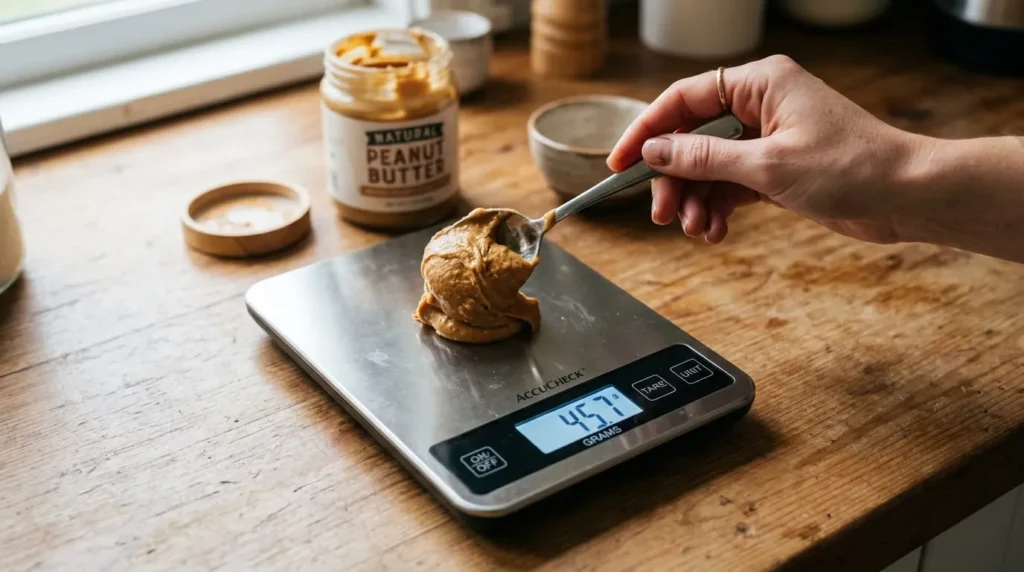
A kitchen scale is the single biggest accuracy upgrade available to anyone tracking calories. Eyeballing a serving of rice or peanut butter is one of the most common sources of error in a food log. Weighing food in grams, rather than estimating by cups or spoonfuls, cuts logging errors dramatically. This matters most for calorie-dense foods like oils, nut butters, and cheese.
How to Read a Nutrition Facts Label Without Getting Tricked
The Nutrition Facts label looks simple, but two details trip up almost everyone who’s new to tracking.
The first is serving size. A bag of chips might list 150 calories per serving, but the bag itself often contains two and a half servings. Eat the whole bag and the actual count is closer to 375 calories, not 150. Always check the servings-per-container line before logging anything from a shared package.
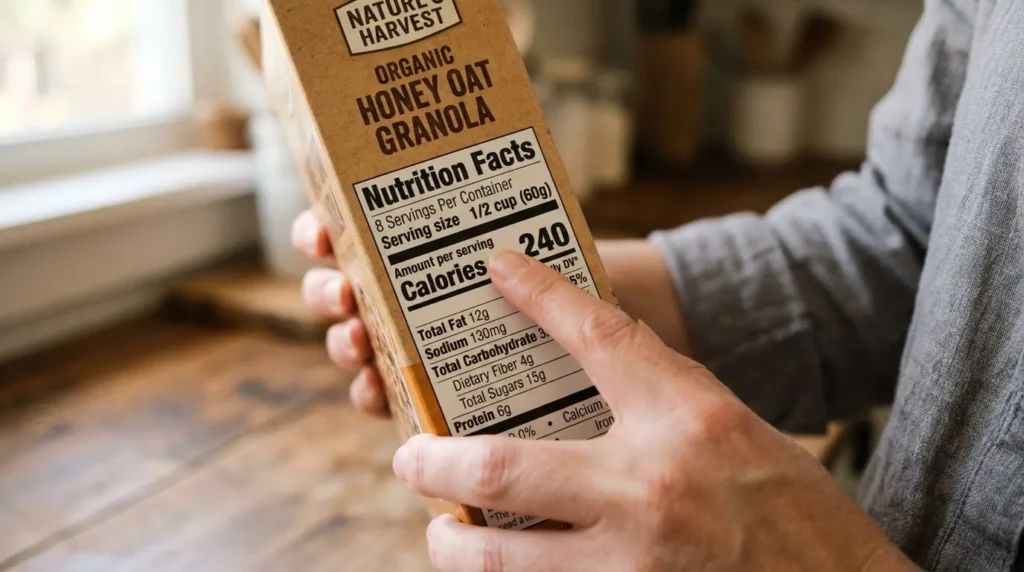
The second is rounding. Labels are legally allowed to round calorie counts, and manufacturers tend to round in their own favor. A product listed at zero calories per serving can still legally contain a small amount, which adds up across multiple servings. For foods you eat daily, check the full nutrition panel and ingredient list for a more honest picture than the calorie number.
Build a Simple Daily Routine for Logging
Consistency matters more than precision. A rough log you keep every day beats a perfect log you abandon after a week.
Log your food before you eat it, not after. This lets you adjust portions in real time, instead of finding out at nine at night that you’re already over target.
Save your usual breakfast and go-to snacks as saved meals or recipes inside your app. This turns a five-minute task into a ten-second one and removes the main reason people skip logging on busy mornings.
Batch-log repeat meals instead of re-entering them from scratch. If you eat the same lunch three times a week, save it once and reuse it.
Log the entire day, including drinks, condiments, and the bites you take while cooking. These small additions are one of the most common reasons a food log doesn’t match the number on the scale.
Common Mistakes That Throw Off Your Numbers
Even careful trackers fall into a few predictable traps.
Eyeballing portions instead of weighing them is the single largest source of error in most food logs. This matters most for calorie-dense foods like oils, nuts, and cheese.
Forgetting condiments and cooking additions, like stir-fry oil or salad dressing, can quietly add hundreds of calories a day.
Skipping weekends or vacations creates blind spots that hide your weekly average, which really determines whether you gain, lose, or maintain weight.
Logging raw ingredients instead of cooked weight, or the reverse, changes the calorie count for foods like rice, pasta, and meat. Cooking changes their weight through water loss or absorption.
Trusting restaurant estimates without adjustment. Restaurant meals often run higher in calories than posted nutrition information suggests, due to inconsistent portioning between locations.
Forgetting cooking oil and butter used in a pan, even a light coating, adds up quickly across multiple meals a day. It rarely gets logged unless measured before cooking.
Tracking Calories When Eating Out
Restaurant meals are the hardest part of calorie tracking because you can’t weigh anything yourself.
Check the restaurant’s published nutrition information before you order, when available, and round up slightly for portion variation between locations. When no nutrition information exists, search your app’s database for a similar dish from a comparable chain rather than guessing from scratch.

Ask for dressings, sauces, and oils on the side whenever possible. This turns a hidden calorie source into one you can measure and log accurately. For homemade dishes at a friend’s house or a potluck, estimate using the closest match in your app. Treat the number as an approximation, not a precise figure.
How Long Should You Track Calories
Most people benefit most from tracking intensively for four to eight weeks. That’s typically long enough to learn realistic portion sizes for the foods you eat regularly.
After that initial stretch, many shift to periodic tracking, logging closely for a week every month or two to recalibrate their instincts. Others keep logging daily because they find the structure genuinely useful for maintaining results. Either approach is valid, as long as the habit keeps serving your actual goal rather than becoming a source of stress.
When Calorie Tracking Isn’t the Right Approach
Calorie tracking isn’t the right tool for everyone. If you have a current or past history of an eating disorder, tracking can reinforce obsessive thoughts about food and numbers. It can get in the way of building a healthier relationship with eating. The same caution applies if logging starts to cause anxiety, guilt, or rigid all-or-nothing thinking around meals.
If any of this sounds familiar, talk with a doctor or a registered dietitian before starting. If you’re already tracking, consider stepping away instead. Non-tracking approaches, like portion-based plate methods or a structured meal plan with a dietitian, can support similar goals without daily numbers.