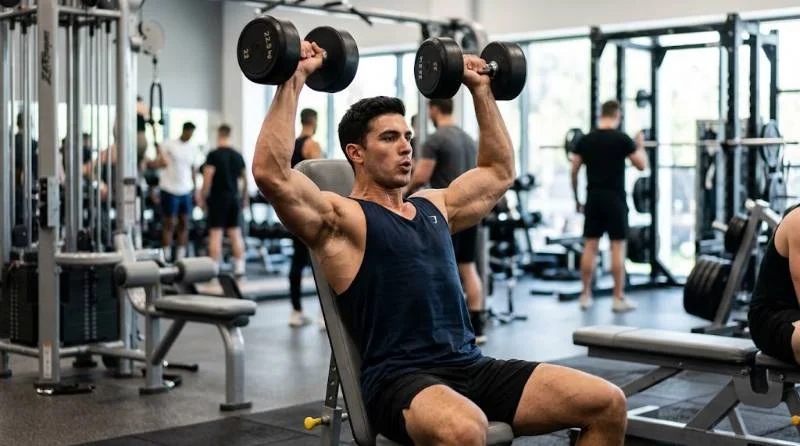

The Arnold press is a dumbbell shoulder press with a rotation built in. The main Arnold press muscles worked are the front delts, side delts, and triceps. That is the short answer. The longer answer helps you train it better. The twist at the bottom changes how load moves across the shoulder, adds stabilizers, and limits how heavy you can go. This guide covers every muscle involved, how hard each one works, and where the exercise falls short. You will also learn how to set it up so the right muscles do the work.
Arnold Press Muscles Worked At A Glance
Three muscle groups do most of the pressing. Several smaller groups keep the shoulder stable while you rotate and press.
- Primary: anterior deltoid, lateral deltoid, triceps brachii
- Secondary: upper trapezius, serratus anterior, rotator cuff
- Assisting: biceps, forearms, and core when standing
The rear deltoid gets far less work than many guides claim. We cover that below.

Primary Muscles
1: Anterior Deltoid
The front delt is the lead muscle in the Arnold press. It raises your arm forward and upward, which is exactly what happens as the dumbbells travel from chest to overhead. It works hardest in the first half of the press, when your elbows sit in front of your body. Most of the rotation happens during this phase, so the front delt stays loaded the whole way.
2: Lateral Deltoid
The side delt lifts your arm out to the side. In the Arnold press, your elbows swing wide as your palms turn forward. That widening puts the side delt to work. It may contribute more here than in a strict press with a fixed elbow position. Bodybuilders value this because side delts create shoulder width. Do not confuse involvement with dominance, though. Lateral raises still train this muscle far more directly.
3: Triceps
The triceps straighten your elbows at the top of every rep. All three heads contribute. Your hands begin near your chest with elbows bent, so the triceps engage from the first inch of the press. On high-rep sets they can give out before the delts do.
Secondary Muscles
Beyond the big three, the Arnold press asks a lot of the muscles that hold your shoulder joint in place.
1: Traps And Serratus
Your upper traps and serratus anterior rotate the shoulder blade upward as your arms go overhead. Without that movement, you cannot finish the press comfortably. Both muscles work harder near full lockout. The serratus is worth noting because it protects the shoulder joint and often gets skipped in general training.
2: Rotator Cuff
The four rotator cuff muscles (supraspinatus, infraspinatus, teres minor, and subscapularis) center the ball of your upper arm in the socket. The rotation in the Arnold press adds an internal-to-external turn under load. That asks the cuff to control the joint through a wider arc than a standard press does. The load is light, so this is stabilization work, not strength training for the cuff.
3: Biceps And Forearms
At the bottom of the rep your palms face you, which is a supinated grip. The biceps and brachialis help hold the dumbbells in that position and assist as you begin the turn. Your forearms grip the weights throughout. None of these muscles drive the press, but they add some fatigue.
4: Core
Standing, your abs, obliques, and spinal erectors brace your torso against the weight overhead. Seated with back support, the core does much less. If your goal is pure shoulder growth, sit. If you want a trunk challenge, stand and keep your ribs down.
What About The Rear Delts?
It is easy to assume the Arnold press hits all three delt heads equally. It does not. The rear delt extends your arm behind your body, and pressing overhead does not require that action. In the Arnold press, the rear delt acts mainly as a stabilizer. It may help control the rotation, but it receives little real training stimulus. If you want bigger rear delts, add reverse flyes, face pulls, or rows to your week.
How The Rotation Changes The Load
The rotation is the whole point of the exercise, so it deserves a closer look.
The first phase begins with dumbbells at chest height and palms facing you. Your elbows are in front of your ribs. The front delts take the load first. As you press, your elbows swing out and your palms turn forward. This is where the side delts and rotator cuff join in. By the top, your arms are extended and your triceps finish the rep.

On the way down, you reverse the path. Lowering slowly keeps tension on the same muscles and adds time under tension without adding weight. Most lifters rush this phase. Slow it down. Pause briefly at the bottom of each rep to remove bounce. A one-second pause keeps the front delts working instead of relying on momentum.
Arnold Press Vs. Shoulder Press
Both exercises train the same core muscles. The difference is in emphasis and load.
A standard dumbbell press keeps your palms forward the whole way. That simpler path lets you use heavier dumbbells, which drives more total tension on the front delts and triceps. The Arnold press uses lighter weights, but it adds range of motion and rotator cuff involvement. Differences in delt activation between the two are small, so neither wins for every lifter.
Choose the standard press when strength is the goal. Choose the Arnold press when you want lighter loads, more range of motion, or a change of pace. Many lifters use both in the same program, with the heavy press first and the Arnold press second.
Does It Build Bigger Shoulders?
Yes, it can. Any shoulder press taken close to failure with good form builds delts. The Arnold press adds a longer path and constant tension, which suits moderate to high rep sets. Aim for 8 to 15 reps per set. Choose a weight that leaves you one or two reps short of failure.
Progress by adding reps first. When you hit 15 clean reps on every set, raise the weight slightly. Then drop back to about 10 reps. This double progression method suits a movement that punishes big jumps.
Expect to use noticeably lighter dumbbells than your regular press. The rotation and the deeper start position make heavy loads awkward. Ego lifting here usually turns the rotation into a sloppy swing.
Form Cues That Target The Right Muscles
Small setup details decide which muscles work. Warm up first with two light sets of band pull-aparts and external rotations. They prepare the cuff for the rotation.
- Sit on a bench with back support, or stand with feet shoulder-width apart.
- Hold the dumbbells at chin height with palms facing you and elbows tucked in front.
- Press up while rotating your palms outward, timing the turn to finish as your arms reach the top.
- Stop just short of locking your elbows to keep tension on the delts.
- Lower slowly, rotating your palms back toward you as the dumbbells descend.
- Keep your ribs down and your neck relaxed throughout.
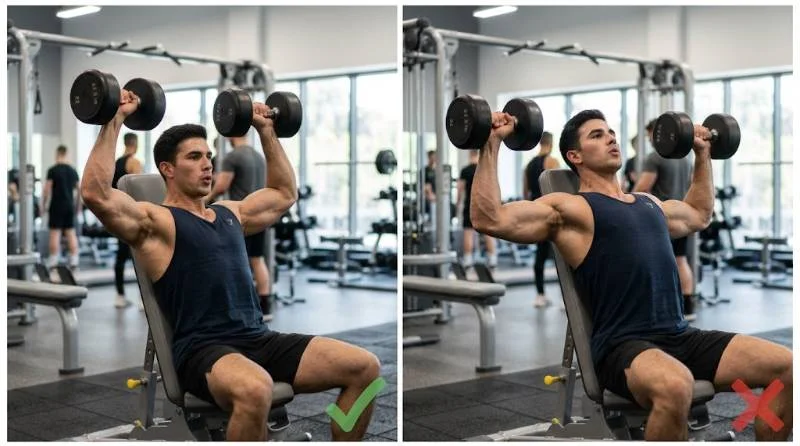
Two common errors cut delt involvement. First, flaring the elbows too early turns the movement into a swing. Second, arching your lower back shifts work to your chest and spine. Both errors also strain the shoulder. If you see either, reduce the weight.
Variations
Small changes to the setup change how much each muscle works. A seated press with back support removes most core demand and lets you push closer to failure. It is the best choice for pure shoulder training. Standing adds abs, obliques, and lower back work. It also limits the load you can use, because the trunk tires first.
Alternating reps let you focus on one arm at a time. Single-arm sets add anti-lean core work and expose strength gaps between sides. A bench set just below upright, around 75 degrees, keeps the front delts loaded and eases lower back strain.
Who Should Skip It
The Arnold press is not right for everyone. The rotation under load puts the shoulder in positions that some lifters do not tolerate well. If you feel pinching at the front or top of the shoulder, stop. Try a neutral-grip dumbbell press instead. It removes the rotation and often feels smoother. Anyone with a diagnosed shoulder injury should check with a physician or physical therapist before adding this movement.
Where It Fits In Your Workout
Place the Arnold press after your heaviest pressing movement. Fatigue matters here, because the rotation punishes tired shoulders. A simple shoulder day could run like this.
- Standing or seated dumbbell press, 3 sets of 5 to 8 reps
- Arnold press, 3 sets of 10 to 12 reps
- Lateral raises, 3 sets of 12 to 15 reps
- Reverse flyes or face pulls, 3 sets of 12 to 20 reps
That order covers all three delt heads, with the Arnold press bridging heavy work and isolation.