


A good treadmill workout does more than fill time on a moving belt. The right routine builds cardiovascular fitness, burns calories efficiently, and protects your joints from the wear that comes with running on pavement. Whether you are stepping onto a treadmill for the first time or looking to break through a plateau, the workout you choose matters as much as the effort you put in. This guide breaks down structured treadmill workouts for every fitness level, explains how to adjust speed and incline for specific goals, and covers the mistakes that quietly stall progress.
How to Structure a Treadmill Workout
Every effective treadmill session follows the same basic shape: a warm up, a main effort block, and a cool down. Skipping any of these three parts is one of the fastest ways to get hurt or burn out on a routine before it has a chance to work.
1: Warm Up Properly
Spend five to eight minutes walking at a relaxed pace before you increase speed or incline. This raises your heart rate gradually and loosens the hips, calves, and lower back. Runners who skip this step are far more likely to feel tightness in the first mile, which often leads to poor form and a higher risk of shin or knee irritation.
2: Match Intensity to Your Goal
The main block of your workout should reflect what you are training for. Steady, moderate paces build a fitness base and support fat loss over time. Short bursts of near-maximal effort build speed and cardiovascular capacity faster, but they demand more recovery. Trying to do both in every session is a common reason people plateau, since the body never gets a clear signal about what to adapt to.
3: Cool Down and Stretch
Reduce your speed gradually over three to five minutes rather than stopping abruptly. This helps blood pressure normalize and reduces post-exercise dizziness. Follow with light stretching for the calves, hamstrings, and hip flexors, the muscles that work hardest during walking and running.
Best Treadmill Workout for Beginners
If you are new to treadmill training, the goal for the first few weeks is consistency, not intensity. This steady-state walking workout builds a foundation without overwhelming untrained joints or connective tissue.
Start with a five-minute warm up at 2.5 to 3 miles per hour with no incline. Increase your speed to a brisk but comfortable pace, one where you can still hold a conversation, for 20 minutes. Set the incline between 1 and 2 percent to mimic outdoor walking, since a completely flat treadmill belt reduces the natural resistance of walking on ground. Finish with a five-minute cool down at your original warm up pace.
Repeat this three to four times per week for two to three weeks before adding intervals or incline work. Rushing this stage is the most common reason beginners quit within the first month.
Treadmill Workouts for Fat Loss
Weight loss on a treadmill comes down to consistently burning more calories than you consume, and certain workout structures make that easier to sustain than others.
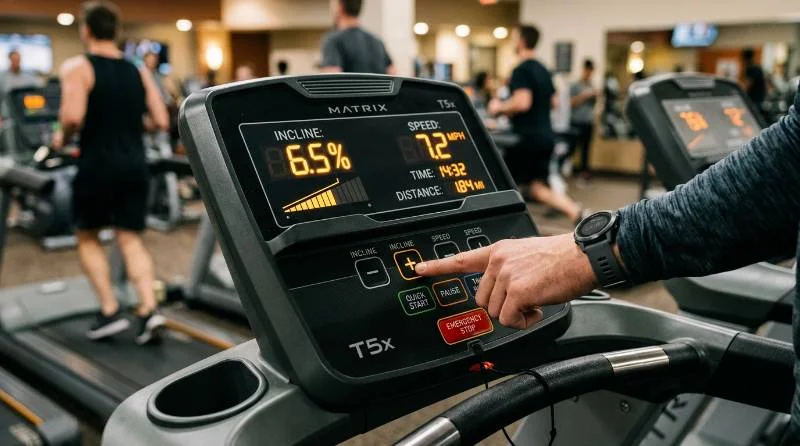
Incline walking is one of the most efficient options because it raises calorie burn significantly without the joint impact of running. Set your treadmill to a 5 to 10 percent incline at a walking pace of 3 to 3.5 miles per hour for 30 to 40 minutes. The added resistance recruits your glutes and hamstrings harder than flat walking, which increases the total energy cost of the session.
Interval training is the other reliable option, alternating between one minute at a challenging pace and two minutes at an easy recovery pace, repeated for 20 to 25 minutes. This approach burns calories during the workout and keeps your metabolism elevated for hours afterward, an effect often called the afterburn.
Neither approach works in isolation. Pairing two to three treadmill sessions per week with a modest calorie deficit through diet produces far more consistent results than relying on exercise alone.
Treadmill Workouts to Build Endurance
Endurance training asks your body to sustain moderate effort for longer periods, which improves how efficiently your heart and lungs deliver oxygen to working muscles.
A progressive pace workout is well suited to this goal. Begin with 10 minutes at an easy jog, then increase your speed by 0.2 miles per hour every five minutes for the next 20 minutes. Hold your final, hardest pace for five minutes before cooling down. This gradual build trains your body to maintain effort even as fatigue sets in, which carries over directly to longer runs or races.
Long, steady sessions also matter. Once a week, aim for 40 to 60 minutes at a conversational pace with no speed changes. This type of training strengthens the slow-twitch muscle fibers responsible for sustained effort and is often underused by people who only train in short, intense bursts.
The 12-3-30 Treadmill Workout Explained
The 12-3-30 workout became popular because it is simple to remember and genuinely effective for many fitness levels. Set the incline to 12 percent and the speed to 3 miles per hour, then walk for 30 minutes.
This combination raises your heart rate close to what you would get from jogging, but without the joint impact, since your feet never leave the belt. It works well for people managing knee or hip sensitivity who still want a demanding cardio session. Beginners should not feel obligated to start at a full 12 percent incline. Building up from 6 or 8 percent over several weeks reduces strain on the calves and Achilles tendon, which take on significant load during steep incline walking.
This routine is not a magic formula, and it should not replace variety in your weekly training. Used two to three times a week alongside other workout types, it is a reliable tool rather than a complete plan on its own.
Treadmill HIIT Workout for Limited Time
High-intensity interval training on a treadmill delivers a strong cardiovascular stimulus in a short window, which makes it useful on days when a full workout is not realistic.
After a five-minute warm up, alternate 30 seconds at a near-maximal running pace with 90 seconds of slow walking recovery. Repeat this cycle eight times, then cool down for five minutes. The entire session, including warm up and cool down, takes about 25 minutes.
Because the effort level is so high, limit true HIIT sessions to two per week with at least one full rest or easy day in between. Doing this style of training too frequently increases the risk of overuse injuries and often leads to declining performance rather than improvement, since the body never fully recovers between sessions.
Treadmill Workout Mistakes That Slow Your Progress
Holding onto the handrails during faster paces or incline work reduces the calorie burn and encourages poor posture, since the body no longer has to stabilize itself naturally. Let your arms swing freely instead.
Doing the same workout every session is another common issue. Your body adapts to a repeated stimulus within a few weeks, which means the workout that once felt challenging eventually stops producing results. Rotating between steady state, incline, and interval sessions across the week keeps progress moving.

Ignoring incline entirely is a missed opportunity. A completely flat treadmill removes the natural air resistance you would face outdoors, so even a 1 to 2 percent incline during regular walks or runs makes the effort more realistic and effective.
Finally, wearing worn-out or unsupportive shoes increases the risk of shin splints and joint pain, especially as weekly mileage increases. Replace running shoes every 300 to 500 miles, or sooner if the tread looks visibly worn.
How Often Should You Do Treadmill Workouts
Most people see steady progress with three to five treadmill sessions per week, mixing intensities rather than repeating the same effort daily. Beginners should start with three sessions to allow joints and connective tissue time to adapt. More experienced exercisers can handle up to five or six sessions if intensity is varied and at least one day includes active recovery or full rest.

Listen to signs of overtraining, including persistent soreness, disrupted sleep, or a resting heart rate that stays elevated. These signals usually mean it is time to scale back intensity or take an extra rest day, not push harder.