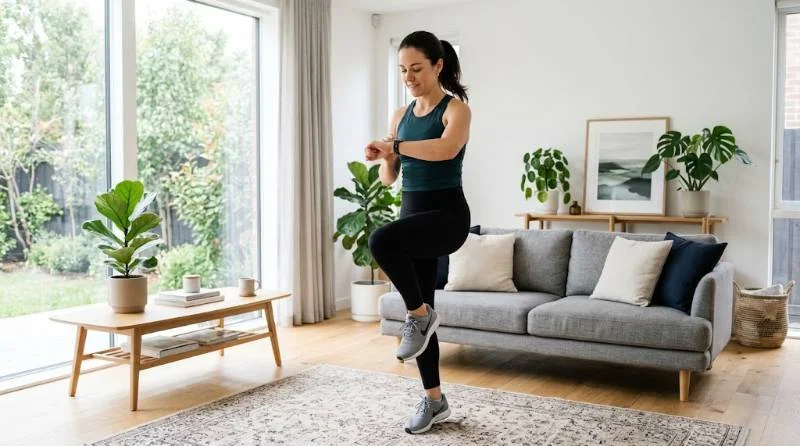

Yes, walking in place counts as steps on almost every fitness tracker, phone, and smartwatch. These devices detect motion, not location. If your body moves like a walk, the device logs steps. The catch is accuracy. Some devices undercount, a few miss steps entirely, and none record real distance. This guide explains how indoor step counting works, which devices handle it best, and how to make every step register.
How Step Counters Detect Walking In Place
Every modern tracker contains a small sensor called an accelerometer. It measures movement in three directions many times per second. Software then looks for the repeating pattern of a footfall and counts each one as a step.
GPS plays no part in this. GPS matters only for distance and pace outdoors. That is why you can log thousands of steps while your map shows you never left the living room.
Why Distance Stays Near Zero
Because you never travel, the device cannot measure how far you went. Most apps estimate distance from step count and stride length, but some show almost nothing for in-place walking. Expect your step total to climb while your mileage stays low.
Why Arm Movement Changes The Count
Wrist devices lean on the swing of your arm. When your hands rest on your hips or hold a remote, the sensor sees very little motion. A firm march with natural arm swing gives the clearest signal. Many missed steps come down to this one habit.
Which Devices Count Walking In Place Best
1: Smartwatches And Wrist Bands
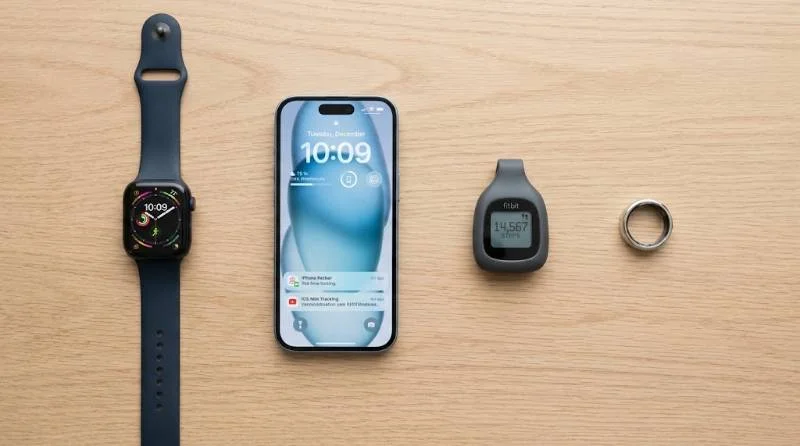
Apple Watch, Fitbit, Garmin, and Samsung Galaxy Watch all count in-place steps. They work best when your arms swing. Light, shuffling steps with still arms are the most common cause of undercounting.
Starting an indoor walk workout also helps. These modes tell the watch you are moving without GPS, so it leans on the motion sensor and your heart rate.
2: Phones In A Pocket Or On A Belt
A phone in your pocket often counts in-place steps well, because your hip and thigh move with each lift. Health apps such as Apple Health, Google Fit, and Samsung Health read from that same sensor. A phone held still in your hand, or left on a table, records almost nothing.
3: Clip-On Pedometers And Smart Rings
Hip-worn pedometers detect the up and down bounce of each step, so firm marching suits them. Smart rings depend on hand movement, which makes them the least reliable option for walking in place.
How Accurate Is Step Counting When You Walk In Place
Expect some error. Trackers are tuned for natural walking, so in-place movement can look different to the algorithm. Some devices overcount and some undercount. Results shift with arm movement, cadence, and where you wear the device.
For a daily total, small differences do not matter much. For a challenge or a strict goal, run a quick hand count and learn how your device behaves. After a few tests, you will know whether to trust the number or adjust your technique.
Why Your Tracker Misses Steps And How To Fix It
Undercounting is the most common complaint. Someone may march for fifteen minutes and see only a few dozen steps. The cause is almost always light movement, not a broken device. Try these fixes in order.
- Lift your knees higher. A clear lift and a firm plant create the sharp motion pattern the sensor looks for.
- Swing your arms the way you would on a brisk walk.
- Slow down slightly. Very fast, shallow stepping blurs into noise, and the device may skip it.
- Start an indoor walking workout on your watch.
- Move your phone to a front pocket or waistband, where it moves more.
- Update the firmware and confirm your height and stride settings are correct.
If the count still looks low, test it. March for one minute while counting steps by hand, then compare the device total. Repeat after each change until the numbers are close.
Walking In Place Vs Walking Outside
1: Calories And Intensity
A step is a step, but the effort behind it differs. Outdoor walking adds forward travel, wind, uneven ground, and hills. Walking in place removes most of that. At an easy pace, it is a lighter workout than the same number of steps outside.
You can close the gap. Higher knee lifts, a faster cadence, and driving your arms raise your heart rate quickly. A brisk march can feel harder than a casual stroll. Body weight also matters, since a heavier body burns more energy per step.
2: Joints And Surfaces
Walking in place is low impact when your feet stay close to the floor. The surface still matters. Hard tile adds impact, so wear supportive shoes. Carpet or an exercise mat softens each step.
3: Walking In Place Vs A Treadmill
A treadmill moves the belt under you, so your stride is longer and your pace is fixed. Walking in place gives you more freedom, since you can stop, change cadence, or move to another room. A treadmill is better for steady, measurable pace. Walking in place is better when you have no equipment and little space.
How Long Does It Take To Reach 10,000 Steps By Walking In Place
A moderate walking pace sits near 100 steps per minute. At that cadence, 10,000 steps takes about 100 minutes. At 120 steps per minute, it takes closer to 83 minutes. For many adults, 2,000 steps is about a mile, so 10,000 steps is roughly five miles of walking.
Nobody needs to do this in one block. Short sessions add up the same way. Ten minutes at 100 steps per minute adds about 1,000 steps. Six of those sessions in a day add 6,000.
A realistic day might look like this: five minutes after breakfast, ten minutes during a TV episode, five minutes on a phone call, and ten minutes after dinner. That is 3,000 steps from 30 minutes of effort, with no gym and no commute.
Does Walking In Place Count As Exercise
Yes, when your heart rate rises and your breathing picks up. Steps and exercise are separate measurements. Steps count movement, while exercise credit depends on intensity.
Some trackers award active minutes only when your heart rate reaches a set zone. An easy shuffle may add steps but no active minutes. A brisk march with knee lifts usually earns both. A simple check is the talk test. If you can talk but not sing, you are at a moderate level.
The standard adult target is 150 minutes of moderate activity per week. Walking in place can count toward that goal when you keep the effort up.
Does Walking In Place Count In Step Challenges And Reward Apps
Usually yes. The app counts what the sensor records, and the sensor cannot tell a living room march from a hallway walk. Rules still vary. Some workplace wellness plans and reward apps set their own limits, so read the terms before relying on indoor steps.
Sitting down and shaking your wrist or swinging the phone is different. Those motions can register steps, but your body is not walking. Most challenge groups treat that as cheating, and it defeats the purpose of tracking. Standing and marching is a fair way to earn steps.
Can You Walk In Place At Work
Yes, in short bursts. Stand up during calls, march during hold music, or take a two-minute round of knee lifts after a long email. Keep the movement small enough that it does not disturb coworkers. A pocketed phone tracks these bursts better than a watch, since your hands are often busy at a desk.
Under-desk treadmills are a separate option. They record real walking at a steady pace, but they cost money and need space.
Who Benefits Most From Walking In Place
Walking in place suits anyone who cannot easily get outside. That includes people dealing with bad weather, late shifts, a new baby, a small apartment, or limited mobility. It also helps people new to exercise or recovering from illness, since you can stop anytime and hold a counter for balance.
Remote workers benefit too. A few minutes between meetings breaks up long stretches of sitting.
When Walking In Place Is Not The Best Choice
It has limits. It does not build the hill strength or outdoor endurance that real walking does. It also removes the variety and mental lift of outdoor routes, which many people value. If you can walk outside safely, mix both.
Anyone with a heart condition, dizziness, joint pain, or balance problems should check with a doctor before starting a new routine. Stop if you feel chest pain, severe breathlessness, or lightheadedness.
Tips To Make Walking In Place Count More
Set a timer for short blocks so the habit feels easy to start. Pair it with something you already do, such as brushing your teeth or watching the news.
Add intervals. March briskly for one minute, then ease off for one minute. This lifts your heart rate without making the session feel long.
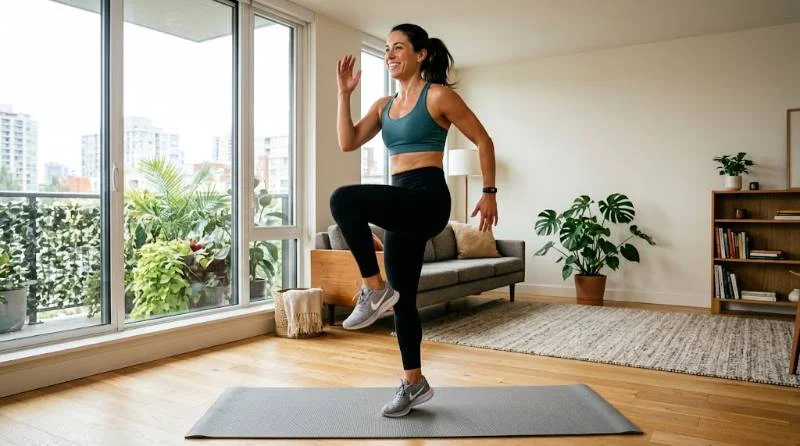
Music helps you hold a steady cadence. Songs between 100 and 120 beats per minute match a brisk walking pace.
Track minutes as well as steps. Steps show volume, while minutes show consistency, and consistency is what builds the habit.