
Forearms are one of the most overlooked muscle groups in strength training. Most lifters spend hours on biceps, chest, and shoulders, then wonder why their grip gives out before their back or legs do during a heavy deadlift or pull-up set. The good news is that you do not need a cable machine or a specialty gym setup to fix this. A basic pair of dumbbells, the kind sitting in millions of home gyms and garages across the US, is enough to build serious forearm strength, size, and grip endurance.
This guide walks through why forearm training matters, the best dumbbell exercises for the job, how to structure a workout, and how to avoid the mistakes that keep people from seeing results.
Why Forearm Training Deserves a Spot in Your Routine
The forearms are made up of more than a dozen small muscles that control wrist movement, finger flexion, and rotation of the hand. Every time you pick up a dumbbell, open a jar, carry groceries, or grip a barbell for a heavy set, your forearms are doing quiet, constant work. Despite that, they rarely get direct attention in a typical training split.
Strong forearms carry benefits that go beyond aesthetics. A stronger grip supports better performance in pulling movements like rows, pull-ups, and deadlifts, since grip fatigue is often the limiting factor long before the target muscle group is fully worked. Forearm training also plays a role in reducing the risk of wrist and elbow strain, which is common among people who type, lift, or do repetitive manual work throughout the day. For anyone who plays racquet sports, climbs, or does manual labor on the side, forearm strength translates directly into daily performance.
There is also a visual argument. Well-developed forearms make the whole arm look more proportional and finished, something bodybuilders and casual lifters alike tend to notice once they start training this area directly.
How Forearm Muscles Work
Broadly, the forearm muscles fall into two groups: the flexors, on the palm side, which curl the wrist and fingers inward, and the extensors, on the back of the hand side, which straighten the wrist and fingers back out. Most people naturally develop flexor strength through everyday gripping and pulling. Extensors get far less use, which is why they often lag and why a balanced routine should train both.
Grip strength itself is a separate but related skill. It depends on how well the flexor muscles and tendons can sustain tension over time, not just how much weight they can move for a single rep. That distinction matters when choosing exercises, since some movements build raw strength while others build the endurance needed to hold a grip under fatigue.
The Best Dumbbell Exercises for Forearm Development
1. Wrist Curls
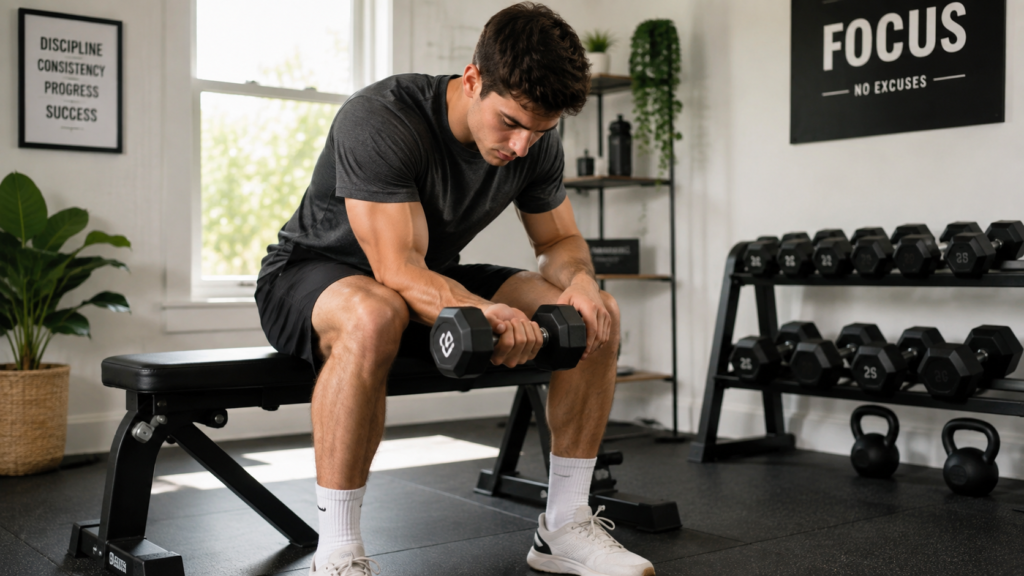
Wrist curls are the most direct way to target the forearm flexors. Sit on a bench, rest your forearm on your thigh or the bench with your wrist hanging just past the edge, and hold a dumbbell with your palm facing up. Curl the wrist upward, pause briefly at the top, then lower it slowly under control. Because the range of motion is small, it is easy to rush this movement, but slowing down the lowering phase is where most of the growth stimulus comes from.
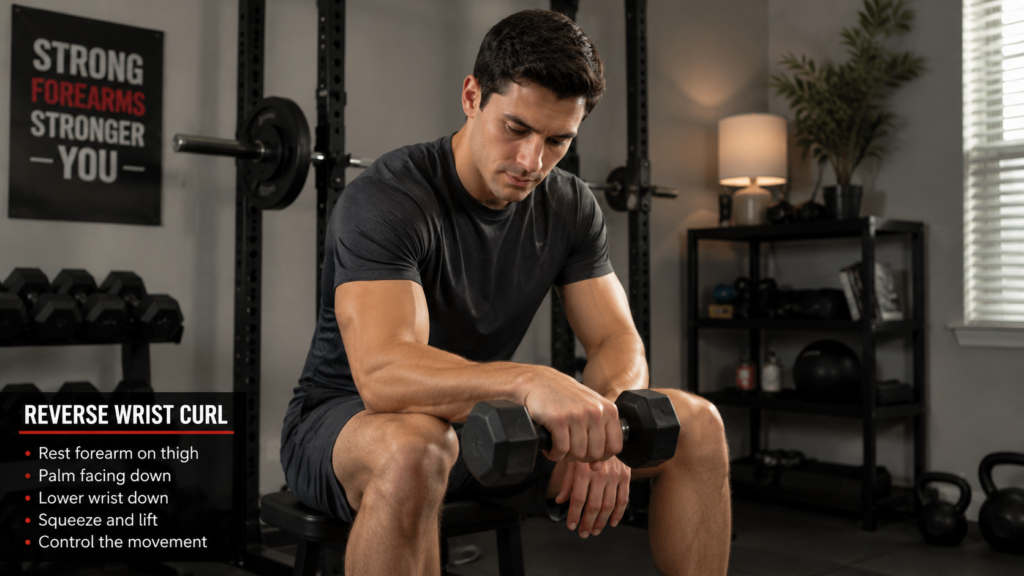
2. Reverse Wrist Curls
This is the same setup as a standard wrist curl, but with your palm facing down. Reverse wrist curls target the extensor muscles on the top of the forearm, the group most people neglect. Use a lighter weight than you would for a regular wrist curl, since these muscles are naturally weaker, and focus on a full, controlled range of motion.
3. Farmer’s Carries
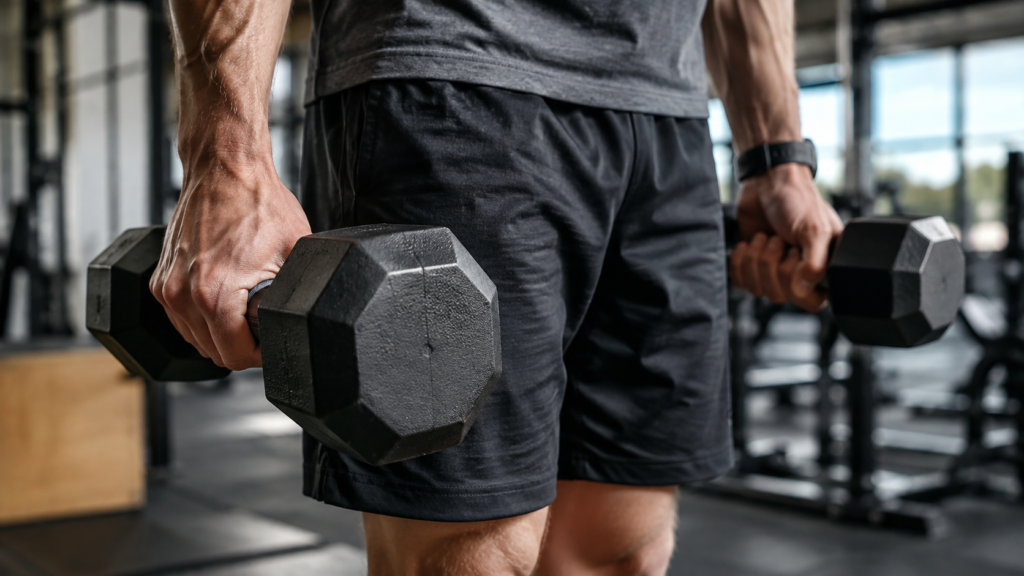
Few exercises build functional grip strength as efficiently as the farmer’s carry. Pick up a heavy dumbbell in each hand and walk a set distance or for a set amount of time, keeping your shoulders back and your core braced. The weight forces your forearms to maintain constant tension for the full duration of the carry, which builds the kind of grip endurance that translates directly to real-world tasks and other lifts.
4. Dumbbell Wrist Rotations (Pronation and Supination)
Hold a dumbbell by one end, letting it hang vertically, and rotate your forearm to turn your palm up and then down, keeping your elbow bent at your side. This movement trains rotational strength and control, which is often missed by curls and carries alone. It also helps build stability around the elbow joint, which is useful for anyone dealing with mild elbow strain from other lifts.
5. Zottman Curls
Zottman curls combine a standard bicep curl with a reverse curl in one movement. Curl the dumbbells up with your palms facing forward like a normal bicep curl, then rotate your wrists at the top so your palms face down, and lower the weight slowly in that reversed position. This hits the biceps on the way up and the forearm extensors on the way down, making it one of the more efficient exercises on this list for anyone short on time.
6. Dumbbell Wrist Extensions off a Table Edge
If you do not have a bench, resting your forearm on the edge of a sturdy table works just as well for wrist curls and reverse wrist curls. This variation is worth mentioning specifically for home lifters who may not have a full gym setup but still want to train forearms properly.
Sample Forearm Workout using only Dumbbells
For most lifters, forearms respond well to higher reps and shorter rest periods, since these muscles are built for endurance as much as strength. A simple, effective session looks like this:
Wrist curls: three sets of 12 to 15 reps; reverse wrist curls: three sets of 12 to 15 reps; Zottman curls: three sets of 10 to 12 reps; Farmer’s carries: three sets, walking 40 to 60 seconds per set; wrist rotations: two sets of 10 reps per direction
Rest 45 to 60 seconds between sets. This routine takes about 20 minutes and can be added to the end of an arm, back, or full-body day, or done on its own two to three times a week if grip strength is a specific priority.
How often should you Train Forearms?
Because forearm muscles are smaller and recover faster than larger muscle groups like the back or legs, they can typically handle more frequent training. Two to three sessions a week, spaced at least a day apart, is a reasonable starting point for most people. Athletes and lifters who rely heavily on grip strength, such as climbers or competitive powerlifters, sometimes train forearms even more often, though that level of frequency should be built up gradually rather than started on day one.
Signs that you are training too often include persistent soreness that does not fade between sessions, or a noticeable drop in grip strength during other lifts like rows or deadlifts. If either shows up, dropping back to two sessions a week for a couple of weeks usually resolves it.
Common Mistakes to Avoid
1. Using too Much Weight
Forearm muscles are small, and the temptation to load up the dumbbell is strong, especially for lifters used to heavier compound movements elsewhere. Too much weight almost always shortens the range of motion and turns a wrist curl into a swinging motion that does little for the target muscle. Lighter weight with a full, controlled range of motion builds more strength over time than a heavy weight moved sloppily.
2. Skipping the Extensors
It is common to train wrist curls regularly while ignoring reverse wrist curls entirely, since the flexors already get indirect work from everyday gripping. This imbalance can contribute to elbow discomfort over time, since the muscles on both sides of the forearm need roughly proportional strength to keep the joint stable. Including reverse wrist curls or Zottman curls in every session helps prevent this.
3. Rushing the Eccentric Phase
The lowering portion of a wrist curl, often called the eccentric phase, is where a large share of the muscle-building stimulus comes from. Letting the dumbbell drop quickly instead of lowering it under control cuts that benefit significantly. Slowing down the lowering phase to two or three seconds makes a noticeable difference over several weeks of training.
Who Benefits Most from Dedicated Forearm Training
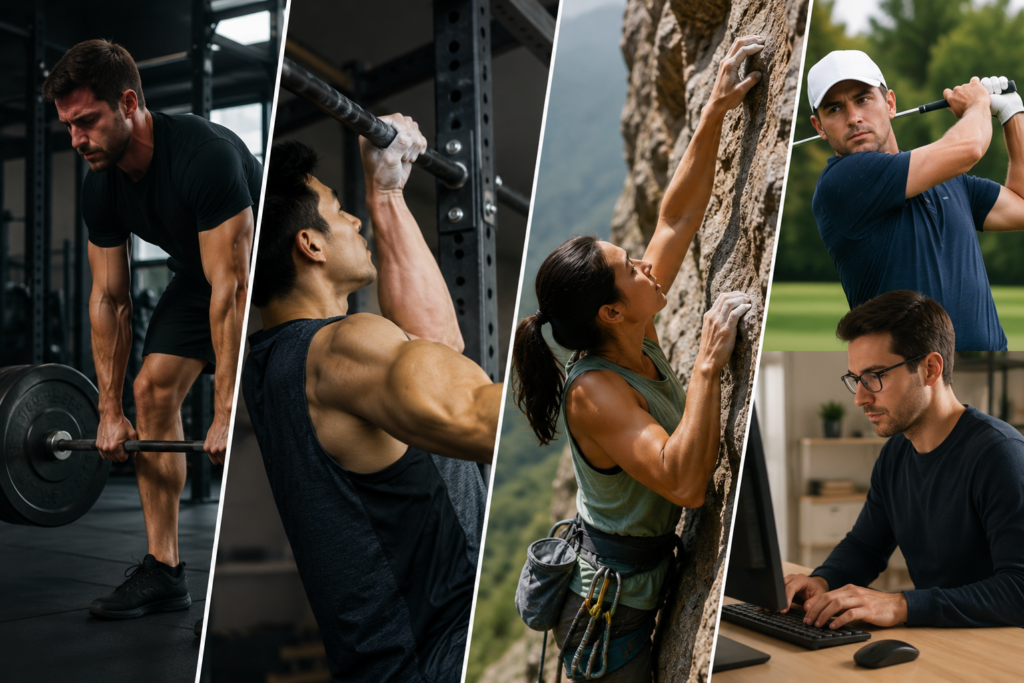
Anyone who lifts weights regularly will notice some benefit, but a few groups tend to see the biggest payoff. Lifters working on their deadlift or pull-up numbers often find that grip is the first thing to fail, and dedicated forearm work directly addresses that bottleneck. Climbers, golfers, and racquet sport players rely on forearm strength and endurance for nearly every movement in their sport. And office workers or anyone doing repetitive desk work can use light forearm training as a way to counteract the strain that comes from hours of typing and mouse use.
For general fitness goals, forearm training is less about a specific outcome and more about closing a gap that most routines leave open. A few sets of wrist curls and carries added to an existing routine is a low-cost way to build strength that supports almost every other lift in the gym.
Building Forearms into a long-term Routine
The biggest factor in forearm development is not any single exercise but consistency over weeks and months. Because these are smaller muscles, visible changes in strength and size take longer to show up than they might in a muscle group like the chest or shoulders. Sticking with two to three short sessions a week, gradually increasing weight or reps as the movements get easier, and keeping both flexors and extensors in the rotation is what produces results over time.
A pair of dumbbells and 20 minutes a few times a week is genuinely enough. The exercises are simple, the equipment barrier is low, and the payoff, in grip strength, injury resistance, and arm development, is one of the better returns available for the time invested.