

A wings workout is a back routine built around the latissimus dorsi, the large muscles that flare out from under your armpits and give your upper body a V shape. The fastest way to grow them is to pull your elbows down and back through a full range of motion, two to three times a week, with enough hard sets. This guide covers the exercises, sets, reps, and a weekly plan you can run at a commercial gym or at home with dumbbells and a band.
What Your Wings Actually Are
Your wings are the lats. Each one starts along the lower spine, the top of the hip bone, and the lower ribs, then attaches to the upper arm bone near the front of the shoulder. When the muscle contracts, it pulls your arm down and back, which is the exact motion of a pulldown or a row.
Bone structure sets your shoulder width, and no exercise changes that. What you can change is muscle size. Bigger lats push your back wider, and paired with a smaller waist, they create the V-taper most people want.
Lats also help you climb, pull, and keep your spine steady under load. A stronger set of wings helps with everyday tasks as well as appearance.
Warm-Up Before You Pull
Spend five minutes warming up so your shoulders are ready. Start with two minutes of light cardio, such as rowing or a brisk walk. Then do 10 band pull-aparts, 8 slow scapular pull-ups (hang from a bar and move only your shoulder blades), and 10 arm circles in each direction.
Finish with one light set of your first exercise at about half your working weight. That set teaches the movement pattern before the heavy work begins.
The Six Best Exercises for Wider Lats
These six moves cover the lats from different angles: vertical pulling, horizontal pulling, and a long-stretch finisher. You do not need all six in one session, and the weekly plan below splits them across two days.
1. Lat Pulldown
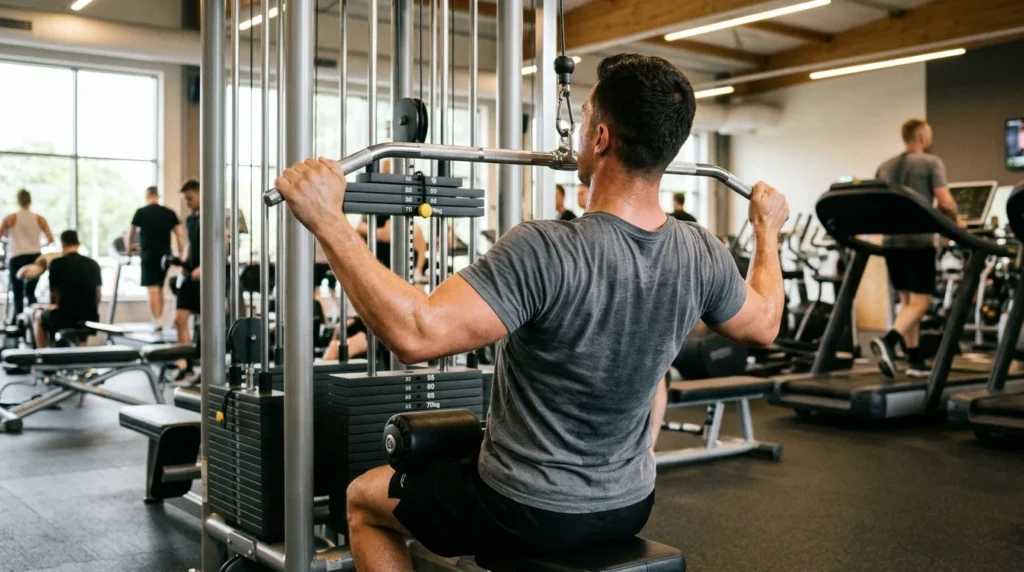
The pulldown is the best starting point because you can load it in small steps. Sit with your thighs locked under the pad, grip the bar just wider than your shoulders, and lean back about 10 degrees. Pull the bar to your upper chest while driving your elbows toward your back pockets.
Let the bar rise until your arms are fully straight. Do 3 to 4 sets of 8 to 12 reps, and pause for one second at the bottom of each rep to keep momentum out of it.
2. Pull-Up or Assisted Pull-Up
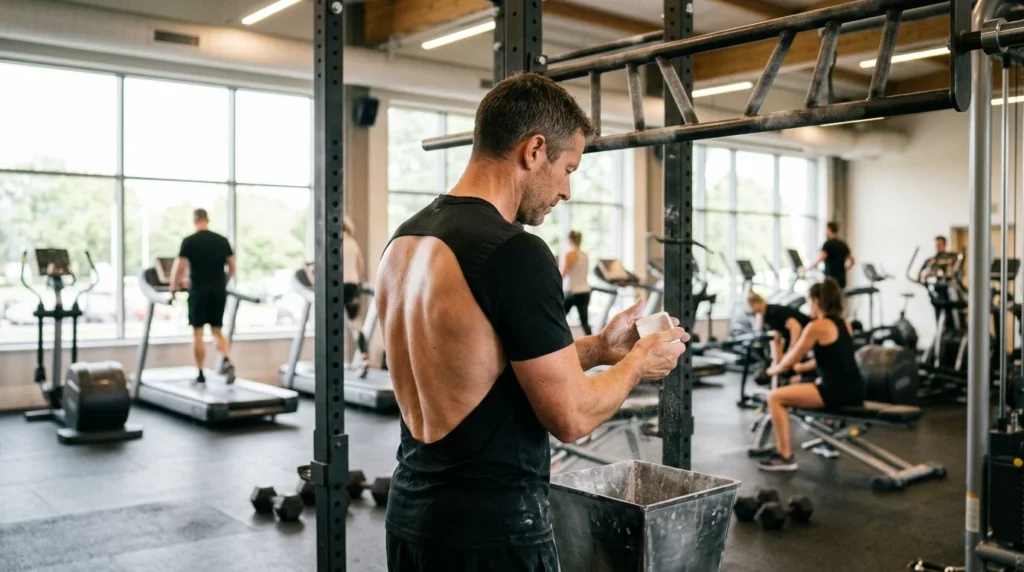
Pull-ups load your lats with your own bodyweight. Start from a dead hang, pull your chest toward the bar, and lower for a count of three. If you cannot yet do five clean reps, use an assisted pull-up machine or a resistance band looped around the bar and your knee.
Aim for 3 sets of 5 to 8 reps. Add reps first, then reduce the assistance.
3. Single-Arm Dumbbell Row
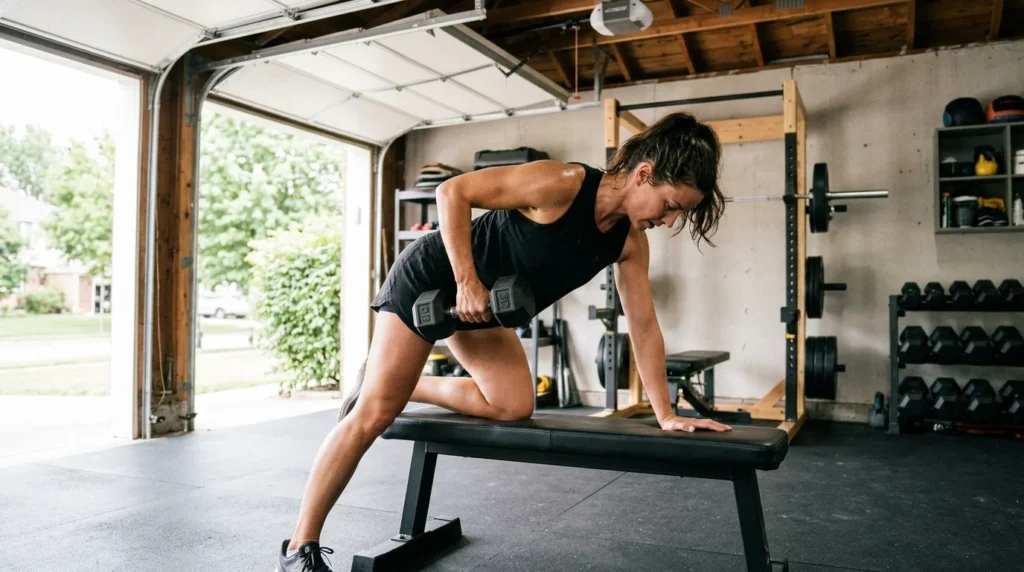
Place one knee and the same-side hand on a bench, keep your back flat, and let the dumbbell hang under your shoulder. Row the weight toward your hip, not your chest, because that path lines the pull up with the lat fibers. Lower slowly until your shoulder blade stretches forward.
Do 3 sets of 10 to 12 reps per side.
4. Seated Cable Row
Use a close, neutral-grip handle and sit tall with a slight bend in your knees. Pull the handle to your lower ribs, squeeze for a second, then let your arms extend fully on the way back. Keep your torso still, since swinging turns the row into a lower back exercise.
Do 3 sets of 10 to 12 reps.
5. Straight-Arm Pulldown
This move isolates the lats without the biceps taking over. Face a cable stack with a rope or straight bar set high, hinge slightly at the hips, and keep your arms nearly straight. Sweep the bar down to your thighs and feel the sides of your back tighten.
Do 3 sets of 12 to 15 reps. Use lighter weight than you expect, because the long lever makes it harder than it looks.
6. Dumbbell Pullover
Lie across a bench with one dumbbell held over your chest. Lower it behind your head with soft elbows until you feel a deep stretch along the sides of your back, then pull it back over your chest. This loads the lats at a long muscle length, which pulldowns and rows rarely do.
Do 2 to 3 sets of 10 to 12 reps.
Sample Weekly Wings Workout Plan
Train your lats twice a week with at least 48 hours between sessions. Day A focuses on width through vertical pulling, and Day B adds thickness through rows and a stretch finisher.
| Day | Exercises | Sets x Reps |
| Day A (Width) | Pull-up or assisted pull-up | 3 x 5 to 8 |
| Lat pulldown | 3 x 8 to 12 | |
| Straight-arm pulldown | 3 x 12 to 15 | |
| Day B (Thickness) | Single-arm dumbbell row | 3 x 10 to 12 per side |
| Seated cable row | 3 x 10 to 12 | |
| Dumbbell pullover | 2 x 10 to 12 |
Rest 90 to 120 seconds between sets on the heavier moves and about 60 seconds on the straight-arm pulldown and pullover.
Sets, Reps, and Progression
Frequency and volume drive most of the results here. A 2016 systematic review and meta-analysis by Brad Schoenfeld and colleagues in Sports Medicine found that training a muscle group twice a week produced more growth than once a week when total volume was equal. A 2017 analysis by the same lead author in the Journal of Sports Sciences found that people doing 10 or more weekly sets per muscle group gained more muscle than those doing fewer than five.
The plan above puts you at roughly 16 to 18 weekly sets for the back, with the lats taking most of that work. The U.S. Department of Health and Human Services, in its Physical Activity Guidelines for Americans, recommends muscle-strengthening activity on at least two days a week for adults.
To progress, use double progression. Stay at the same weight until you hit the top of the rep range on every set, then add the smallest jump available (usually 5 pounds) and drop back to the low end of the range. Stop each set with one or two reps left in reserve rather than grinding to failure every time.
Form Mistakes That Shrink Your Results
Most stalled wings workouts come down to a few repeat errors. Fixing them often matters more than adding another exercise.
Pulling with your hands instead of your elbows is the most common one. Think about driving your elbows down and back, and treat the handle as a hook. If your forearms burn before your back does, your grip is doing too much, and lifting straps can help on the heaviest sets.
Shrugging your shoulders toward your ears during a pulldown moves the work to your upper traps. Start each rep by pulling your shoulder blades down first.
Swinging your torso to move heavier weight cuts the range of motion and the tension on the lats. Drop the weight until you can pause at the bottom of every rep.
Behind-the-neck pulldowns are worth skipping. The position puts the shoulder joint in a vulnerable spot, and a front pulldown trains the lats just as well.
Half reps are the last one. Lats grow when they are stretched under load at the top and fully shortened at the bottom, so use the whole range.
Wings Workout at Home With Dumbbells and Bands
You can train the same movement patterns with minimal equipment. A pair of adjustable dumbbells, a long resistance band, and a doorway pull-up bar cover almost everything above.
Swap the cable row for a band row anchored to a sturdy post, and replace the lat pulldown with a band pulldown anchored overhead (kneel and pull the band to your chest). Do the straight-arm pulldown the same way with the band anchored high. Keep the single-arm dumbbell row and do the pullover on the floor with a single dumbbell if you have no bench.
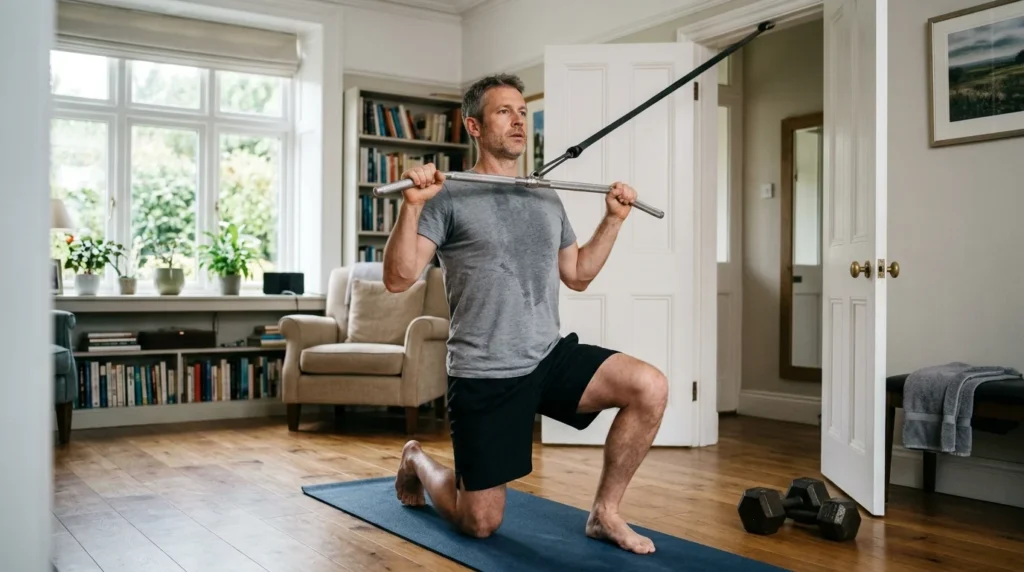
Because bands and light dumbbells offer less load, slow your reps to three seconds on the way down and pause at the point of peak contraction. Reaching the 10 weekly set target is still realistic with these tools.
Safety Notes Before You Start
Check with a doctor before beginning a new strength program if you have a shoulder, neck, or back injury, high blood pressure, or any heart condition. Sharp or pinching pain in the shoulder means stop the set and lower the load, while ordinary muscle burn and fatigue are expected.
If you are new to pulling exercises, a session or two with a certified trainer can help you learn the elbow path and shoulder position. Soreness in the lats and upper back for a day or two is normal after your first few sessions.