
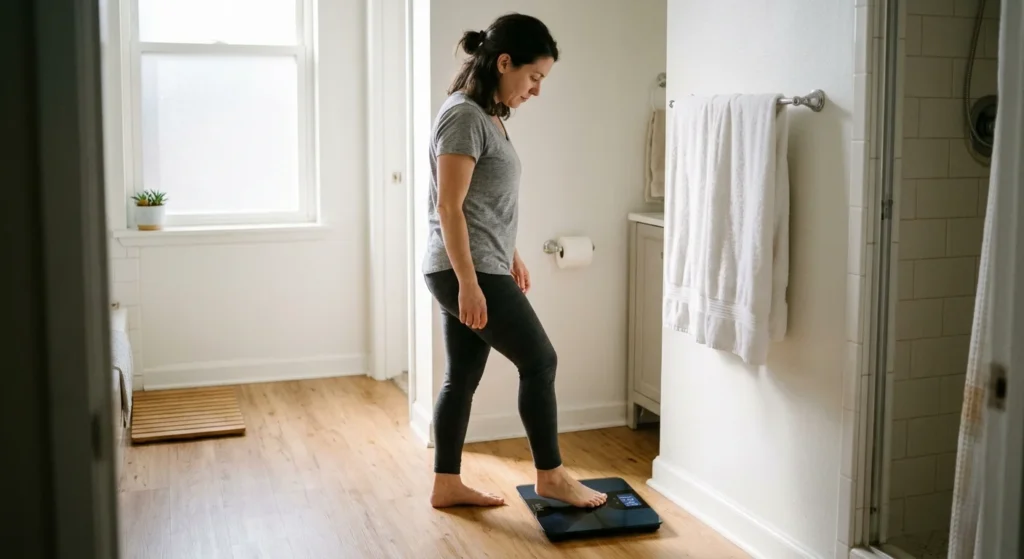

You can see the scale drop 5 pounds in a week, but most of that loss comes from water, stored carbohydrate, and food weight rather than body fat. The CDC says people who lose 1 to 2 pounds per week are more likely to keep the weight off, which is the safer pace for real fat loss. If you want to know how to lose 5 pounds in a week for a wedding, a weigh-in, or a doctor’s visit, this guide covers what is realistic, what works, and what to avoid.
What Five Pounds in a Week Actually Means
One pound of body fat holds roughly 3,500 calories. That is an older estimate that researchers like Kevin Hall at the National Institutes of Health have criticized as too simple, but it still works as a rough guide. Losing 5 pounds of pure fat in seven days would need a deficit near 2,500 calories a day.
For most adults, that means eating almost nothing while training hard. It is not safe, and the muscle you lose along the way makes the next month harder.
So where does a 5-pound drop come from? Usually from three places.
The first is glycogen and water. Your muscles and liver store carbohydrate as glycogen, and early exercise physiology research by Olsson and Saltin (1970) found that each gram is stored with roughly 3 grams of water. Cut carbs, and you burn through glycogen, which releases that water. This alone can account for 2 to 4 pounds in the first week.
The second is sodium-related water retention. Restaurant meals, deli meat, frozen dinners, and chips can leave you holding extra fluid. Eating less of them can pull a pound or two off the scale within days.
The third is food weight. A full digestive tract can hold a few pounds of material, and eating less and lighter food reduces it.
The remainder, usually 1 to 2 pounds, is true fat loss. That is a good week, and it is the part that stays off.
Who Can Safely Try a Faster Week
A faster first week is most common in people with more weight to lose. Someone who is 250 pounds will drop water and glycogen more dramatically than someone who is 140 pounds and already lean. If you are close to a healthy weight, expecting 5 pounds in seven days sets you up for frustration.
The National Heart, Lung, and Blood Institute notes that a healthy weight loss goal for most people is 1 to 2 pounds per week. Faster loss deserves medical supervision, especially if you take medication for diabetes or blood pressure, since changes in food intake can change how much medication you need.
Skip this plan if you are pregnant, breastfeeding, under 18, recovering from an eating disorder, or managing a chronic condition without your doctor’s approval. This article is general information and not medical advice.
The 7-Day Game Plan
This plan aims for a larger first-week drop while staying inside what most healthy adults can handle. It does not use extreme calorie cuts, and you should adjust it with your doctor or a registered dietitian.
1. Cut Back on Added Sugar and Refined Carbs
Start here, because it produces the fastest visible change. Swap soda, sweet coffee drinks, white bread, pastries, and sugary cereal for whole foods like oats, beans, fruit, and vegetables. You do not need to go near zero carbs, which is hard to stick to and leaves most people tired and irritable by day three.
The Dietary Guidelines for Americans from the USDA and HHS recommend keeping added sugars under 10 percent of daily calories. On a 1,800-calorie day, that is about 45 grams. Most American adults eat well above that, so cutting back often creates a deficit without counting anything.
2. Eat More Protein and Fiber
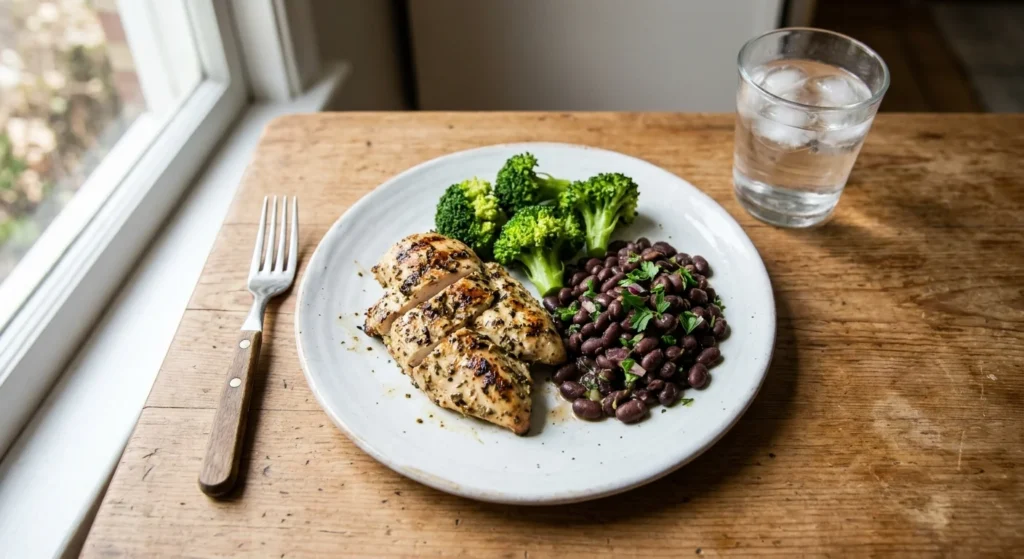
Protein and fiber keep you full, which makes a calorie deficit easier to hold. Build each meal around lean protein such as eggs, Greek yogurt, chicken breast, canned tuna, tofu, or lentils. Add a high-fiber side like broccoli, berries, chia seeds, or black beans.
The USDA’s RDA for protein is 0.8 grams per kilogram of body weight, and many dietitians suggest going somewhat higher during weight loss to protect muscle. Ask a registered dietitian what number fits you. Eating enough protein also means the weight you lose is more likely to be fat than muscle.
3. Manage Sodium and Drink Enough Water
The Dietary Guidelines set a limit of 2,300 milligrams of sodium per day for adults, and the average American eats closer to 3,400 milligrams according to the CDC. Most of it comes from packaged and restaurant food, not the salt shaker. Cooking at home for a week is the simplest way to cut it.
Drinking water does not burn fat, but it keeps hunger honest and helps your body clear sodium. Aim for pale yellow urine rather than a fixed number of glasses. Do not cut water to drop weight, since dehydration shows up as headaches, dizziness, and a scale number that bounces right back.
4. Walk More and Add Strength Training
The Physical Activity Guidelines for Americans recommend at least 150 minutes of moderate activity per week and two days of muscle-strengthening. For this week, aim for a daily walk of 30 to 45 minutes, plus two or three short strength sessions with squats, push-ups, rows, and lunges. Strength work tells your body to hold on to muscle while you eat less.
If you are new to exercise, start with 20 minutes and build. A sore, exhausted body on day two is not a sign of progress, and it makes day five harder to finish.

5. Protect Your Sleep and Watch Stress
Sleep is the part most weight-loss plans skip. In a 2010 study in the Annals of Internal Medicine, Nedeltcheva and colleagues found that dieters sleeping 5.5 hours lost about 55 percent less fat than those sleeping 8.5 hours, even with the same calorie intake. They also lost more lean mass.
Target seven or more hours a night. Poor sleep and high stress also raise hunger and late-night snacking, which can erase a week of effort in a couple of evenings.
A Sample Day of Eating
Here is what a typical day might look like using common US grocery foods. Portions depend on your size and activity, so treat this as a pattern and not a prescription.
- Breakfast: two scrambled eggs, a slice of whole-grain toast, and a cup of berries
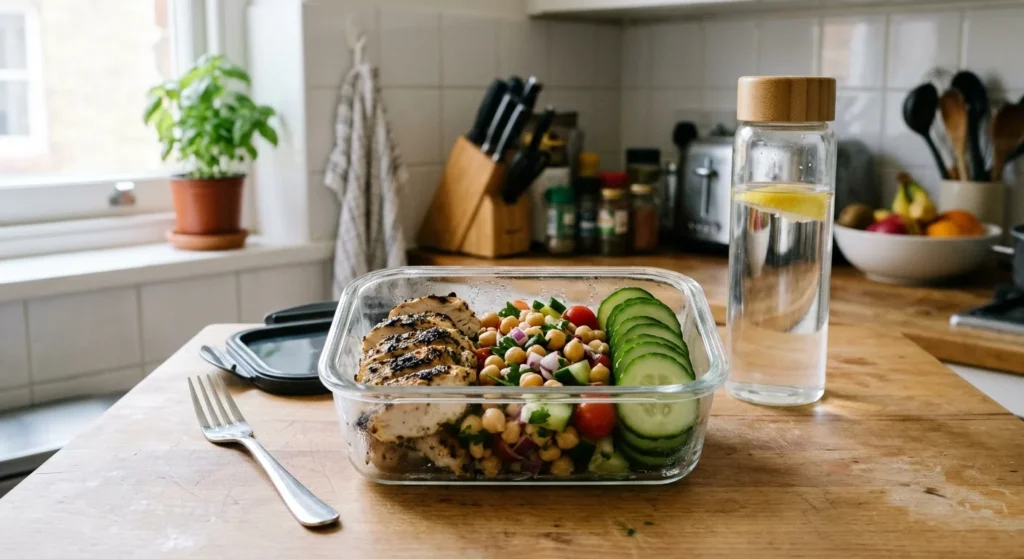
- Lunch: a large salad with grilled chicken, chickpeas, cucumber, and olive oil and vinegar
- Snack: plain Greek yogurt with a small handful of almonds
- Dinner: baked salmon, roasted broccoli, and half a cup of brown rice
Most healthy adults should not eat below about 1,200 calories (women) or 1,500 calories (men) without medical supervision, a range Harvard Health Publishing has cited for years. If your plan puts you under that range, talk to a doctor first.
What to Skip
Plenty of fast-loss tricks look tempting. Most either do nothing for fat or carry real risk.
Laxatives and diuretic pills drop water weight and nothing else. They can cause electrolyte problems and dependence, and the weight returns when you rehydrate. Sauna suits, juice cleanses, and detox teas work the same way, with the added problem of leaving you hungry and irritable.
Skipping meals for days also backfires. It tends to lower your energy, slow your workouts, and set up a binge by the weekend. Very low-calorie diets used for medical weight loss are run by physicians who monitor labs, and that is not something to copy at home.
Be wary of any product that promises a specific amount of weight loss in a week. The Federal Trade Commission has repeatedly taken action against weight-loss advertisers for claims they could not support.
What Happens After Week One
Expect the scale to rise a pound or two once you eat more carbs and sodium again. That is water, not fat regained. Weigh yourself at the same time each morning and watch the weekly trend, not a single day.
The first week works best as a launch point. If you keep a moderate deficit, you can expect about 1 to 2 pounds per week from there, and that pace adds up to 4 to 8 pounds a month, which is the kind of loss that tends to stick. Plan for foods you enjoy, because a diet you hate rarely lasts past week three.
When to Talk to a Doctor
Check in with a physician before starting if you have diabetes, heart disease, kidney disease, high blood pressure, or take prescription medication. Stop and call your doctor if you feel faint, have chest pain, a racing heartbeat, or severe fatigue during the week.
If you need to lose significant weight, a primary care doctor or registered dietitian can build a plan that fits your health history and goals. Losing 5 pounds in a week is a number worth understanding, but a plan you can keep for months matters more.