
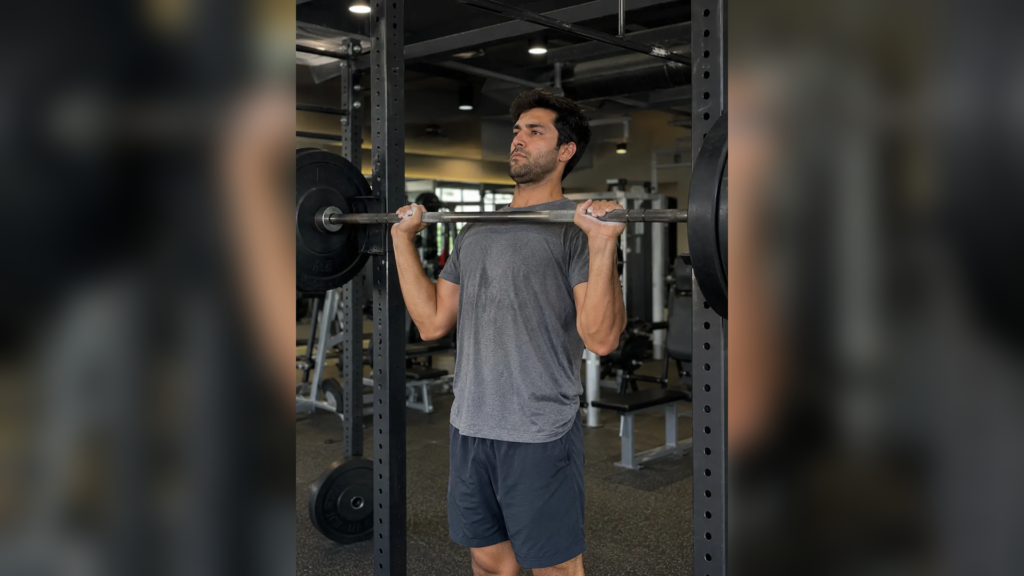

The overhead press is a standing exercise where you push a loaded barbell from shoulder height to full arm extension above your head. It trains the shoulders, triceps, and upper chest while forcing your core and legs to stay tight for balance. Most lifters know it by its short name, the OHP, and it sits alongside the squat, bench press, and deadlift as one of the main barbell lifts used in strength programs across US gyms.
What the Overhead Press Actually Trains
The main mover in the overhead press is the anterior deltoid, the front part of the shoulder. The medial deltoid and upper trapezius help lift the bar past head height, and the triceps finish the lockout at the top. Your core and glutes work the whole time to stop your lower back from arching under the load.
This is different from a bench press, where you’re lying down and the bar path is shorter. Standing up under a bar forces stability work that a machine or a seated press can’t replicate. That’s why strength coaches like Mark Rippetoe, author of Starting Strength, have long treated the standing barbell press as a core lift rather than an accessory movement.
Overhead Press Barbell Setup and Grip
Getting the setup right matters more than most lifters expect. A bad starting position turns an easy weight into a fight.
1. Rack Height and Grip Width
Set the barrack pins so the bar sits at roughly collarbone height when you stand under it. If the pins are too low, you’ll waste energy standing the bar up before you even start the press. Grip the bar just outside shoulder width, with your wrists stacked directly over your elbows, not bent back.
2. Starting Position
Before you unrack, brace your core like you’re about to take a punch to the stomach. Squeeze your glutes and keep your ribs pulled down instead of flared out. The bar should rest on your front deltoids and upper chest, not down on your collarbone.
Step-by-Step Overhead Press Form
- Unrack the bar and take one small step back so you’re clear of the uprights.
- Set your feet about hip width apart and brace your core.
- Press the bar straight up, moving your head back slightly so the bar can travel in a straight line.
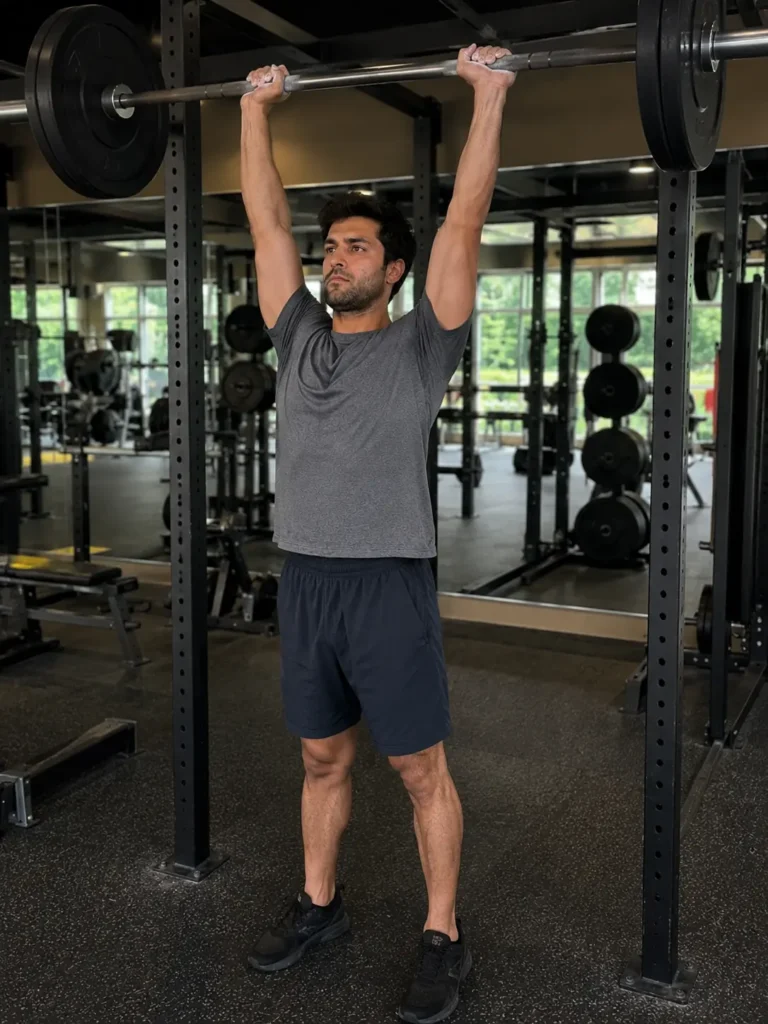
- Once the bar clears your forehead, push your head forward through the gap, so the bar finishes directly over your ears and mid-foot.
- Lock your elbows out fully at the top and hold for a moment before lowering under control.
- Lower the bar back to your shoulders along the same path, keeping your core braced the whole way down.

The bar path should look close to a straight vertical line from a side view, with a small forward-and-back head movement to let it pass. If the bar drifts forward, your shoulders and lower back end up doing extra work they weren’t meant to do.
Common Overhead Press Mistakes
Even experienced lifters fall into a few repeat problems with this lift.
1. Arching the lower back instead of raising the arms
When the weight feels heavy, it’s tempting to lean back and turn the press into an incline movement. This shifts stress onto the spine and reduces how much the shoulders actually do.
2. Flaring the elbows too wide at the start
A wide elbow position at the bottom makes the first few inches of the press harder and puts unwanted strain on the shoulder joint. Keep the elbows roughly under the bar, not out to the sides.
3. Skipping the head movement
Lifters who keep their head fixed in place end up pressing the bar around their face instead of through it, which curves the bar path and wastes strength.
4. Not bracing the core
Without a tight midsection, the lower back takes over and the lift turns into a lower-back exercise instead of a shoulder one.
Overhead Press vs Push Press vs Dumbbell Press
The strict overhead press uses only the upper body, with no leg drive. The push press adds a small knee bend and hip drive to help move heavier weight, which is useful for lifters training for power rather than pure shoulder strength. The dumbbell version lets each arm move independently, which can expose left-right strength differences that a barbell hides, and it also demands more stabilizer work at the shoulder joint.
None of these replace the others outright. Many lifters rotate between the strict barbell press and the dumbbell version across a training block to build both raw strength and joint stability.
Overhead Press Muscles Worked and Why It Carries Over
Beyond the shoulders and triceps, the overhead press builds trunk stability that carries over to almost every other lift. A stronger midsection from years of standing presses tends to show up in a steadier squat and a more locked-in deadlift position. It also builds the kind of shoulder strength that shows up in daily tasks, like lifting something onto a high shelf without straining.
The National Strength and Conditioning Association lists the standing barbell press among the core upper-body pushing patterns worth including in a general strength program, alongside the bench press, precisely because it trains pressing strength and full-body bracing at the same time.
Programming the Overhead Press Barbell Work Into Your Week
For most lifters training two or three times a week, the overhead press works well as the main pressing movement on one day, paired with pulling work like rows or pull-ups. A common starting approach is three sets of five reps at a weight that’s challenging but leaves one or two reps in reserve on the last set.

Progress is usually slower on this lift than on the bench press, since the shoulders are working without the chest and a stable bench to help. Adding 2.5 to 5 pounds per session once you can complete all sets cleanly is a realistic pace for most beginners, dropping to smaller jumps or weekly increases once the early gains slow down.

