

Tightness around your shoulder blades can make everyday activities uncomfortable, especially after sitting at a desk, working out, or spending hours looking at your phone. Learning how to stretch shoulder blade muscles can help reduce muscle tension, improve upper-back mobility, and make shoulder movements feel more comfortable.
The shoulder blades, also called scapulae, are surrounded by muscles that support your neck, shoulders, and upper back. These include the rhomboids, trapezius, and serratus anterior. Gentle stretching can help loosen tight areas, particularly when combined with regular movement and good posture.
Here are seven simple stretches you can try at home without expensive equipment.
Why Do Your Shoulder Blade Muscles Become Tight?
Several everyday habits can contribute to tight muscles around your shoulder blades. Sitting for extended periods, working at a computer, carrying heavy bags, and repetitive upper-body movements can place stress on the surrounding muscles.
Common reasons include:
- Long periods of sitting: Remaining in one position can make your upper-back muscles feel stiff.
- Poor desk posture: Leaning forward or rounding your shoulders may increase muscle strain.
- Intense workouts: Repeated rows, pull-ups, and other upper-body exercises can leave muscles feeling tight.
- Sleeping position: Awkward sleeping positions may contribute to morning shoulder discomfort.
- Limited movement: Spending most of the day without changing positions can contribute to stiffness.
The rhomboids, which sit between your shoulder blades, help pull your shoulder blades toward your spine. When these muscles feel tight, you may notice discomfort between your shoulder blades.
7 Easy Exercises to Stretch Your Shoulder Blade Muscles
You can perform these movements at home using a chair, a wall, or a comfortable floor space. Start slowly and avoid forcing your shoulders into uncomfortable positions.
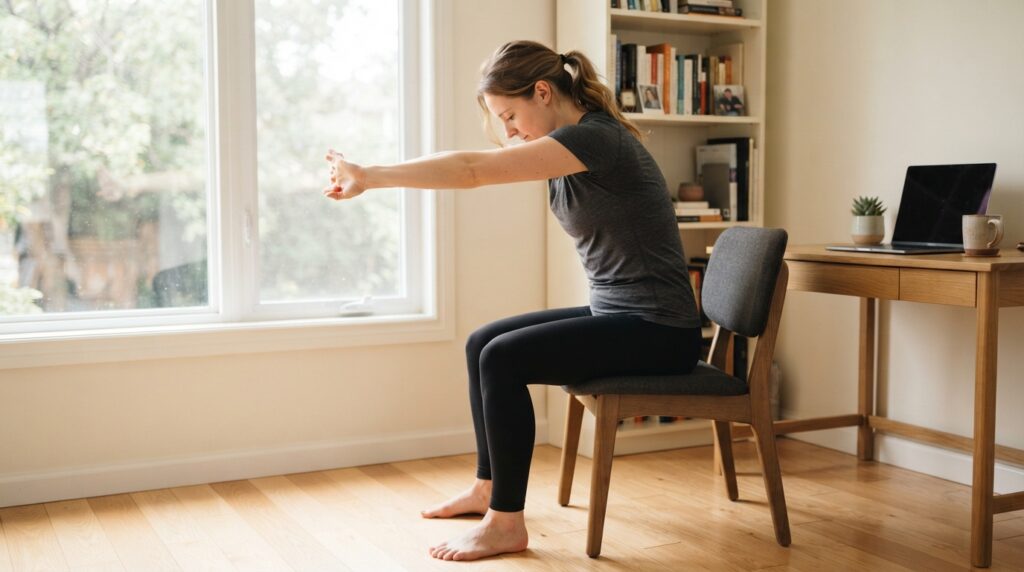
1. Seated Rhomboid Stretch
The seated rhomboid stretch targets the muscles between your shoulder blades. It is particularly useful when your upper back feels tight after working at a computer.
How to do it:
- Sit upright in a comfortable chair with your feet flat on the floor.
- Extend both arms in front of your chest.
- Interlock your fingers and turn your palms outward.
- Slowly reach your hands forward while gently rounding your upper back.
- Allow your shoulder blades to move apart.
- Hold the position for 15 to 30 seconds.
- Relax and repeat two to four times.
Keep your neck relaxed and avoid pushing your head forward. You should feel a gentle stretch across your upper back.
2. Cross-Body Shoulder Stretch
This movement stretches the back of your shoulder and surrounding muscles. It is a simple option when your shoulders feel stiff after repetitive activities.
How to do it:
- Stand or sit with your back comfortably straight.
- Raise your right arm to chest height.
- Move it across your body toward your left shoulder.
- Use your left hand to gently guide your right arm closer to your chest.
- Keep your shoulders relaxed.
- Hold for 15 to 30 seconds.
- Switch arms and repeat.
Do not pull your arm forcefully. The movement should create a mild stretch around the back of your shoulder.
3. Shoulder Rolls
Shoulder rolls are simple movements that help you move your shoulder blades through a comfortable range of motion. They work well as a warm-up before other stretches.
How to do it:
- Stand or sit with your arms relaxed at your sides.
- Slowly raise both shoulders toward your ears.
- Move your shoulders backward in a circular motion.
- Lower them gently.
- Bring them forward to complete the circle.
- Repeat four to five times.
- Reverse the direction and repeat.
Keep the movement smooth instead of making large or sudden circles. Avoid shrugging forcefully.
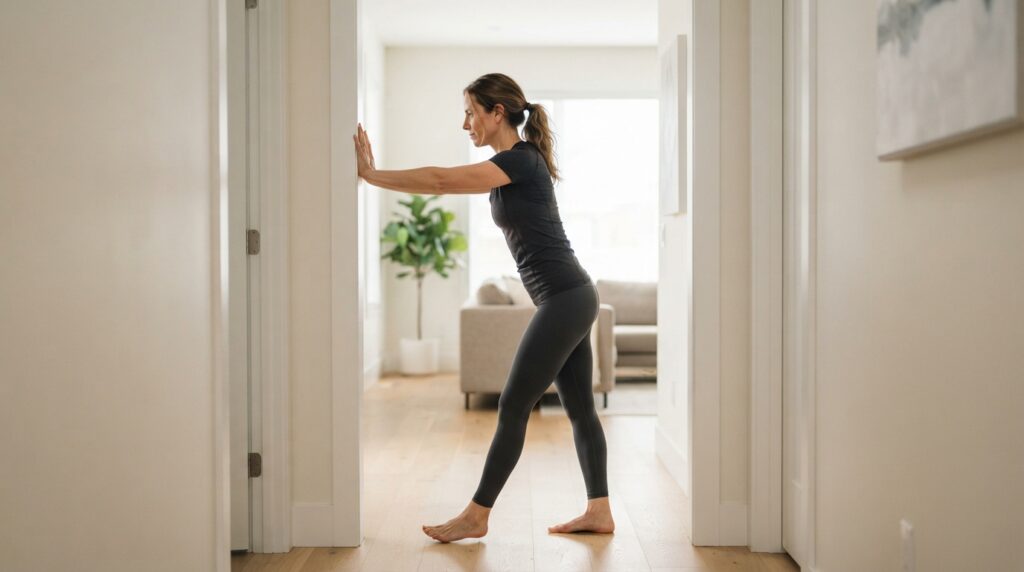
4. Doorway Chest Stretch
Tight chest muscles can contribute to a rounded shoulder position. A doorway stretch gently opens the front of your chest and stretches the pectoral muscles.
How to do it:
- Stand in an open doorway.
- Place your forearms against the doorframe.
- Keep your elbows at or slightly below shoulder height.
- Step one foot forward.
- Gently lean your chest forward until you feel a stretch across your chest.
- Hold for approximately 20 to 30 seconds.
- Return to the starting position and repeat twice.
Do not lean too far forward or allow your shoulders to roll upward. Stop if you experience sharp pain or pinching.
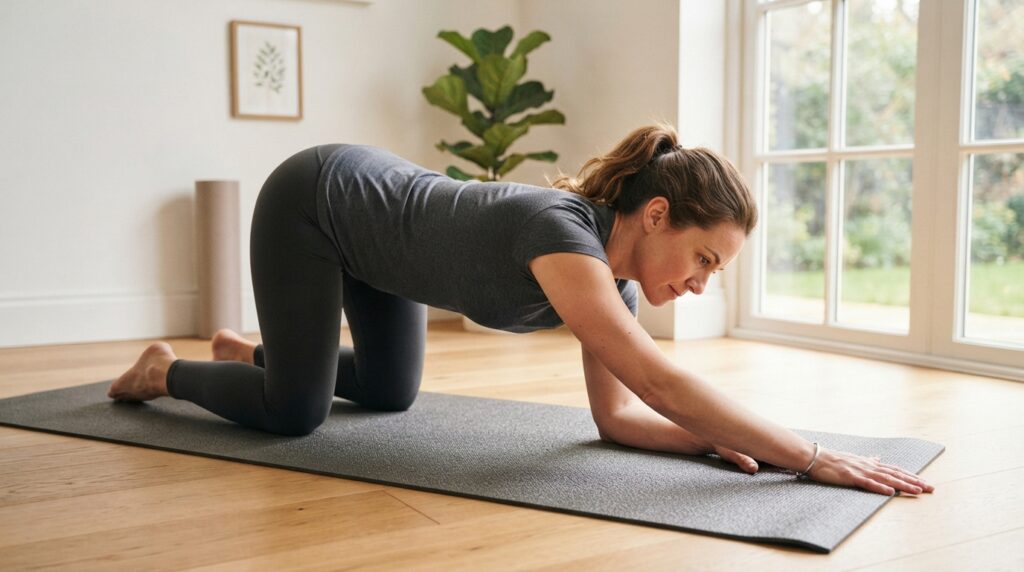
5. Child’s Pose
Child’s pose is a gentle floor stretch that targets the upper back, shoulders, and surrounding muscles. It can be a comfortable choice when your upper back feels stiff after a long day.
How to do it:
- Begin on your hands and knees on a comfortable mat.
- Slowly move your hips backward toward your heels.
- Extend both arms forward along the floor.
- Lower your chest gently toward the ground.
- Relax your neck and allow your upper back to lengthen.
- Hold for 15 to 30 seconds while breathing normally.
- Return to your starting position slowly.
If your knees feel uncomfortable, place a folded towel or cushion underneath them. You can also place a pillow between your hips and heels for additional support.
6. Thread the Needle Stretch
Thread the needle is a gentle rotational movement that targets the upper back and surrounding shoulder muscles. It can help improve comfortable thoracic spine movement.
How to do it:
- Start on your hands and knees.
- Keep your right hand on the floor.
- Lift your left arm toward the ceiling.
- Slowly move your left arm underneath your right arm.
- Allow your left shoulder to move gently toward the floor.
- Keep your hips relatively steady.
- Hold for 15 to 20 seconds.
- Return to the starting position and repeat on the other side.
Move slowly and avoid twisting beyond your comfortable range. You do not need to force your shoulder all the way to the floor.
7. Chest T Stretch
The chest T stretch allows your chest and shoulders to relax while your arms remain extended. It can be helpful when the front of your shoulders feels tight.
How to do it:
- Lie on your back on a comfortable exercise mat.
- Bend your knees and keep your feet flat on the floor.
- Extend both arms outward to form a T shape.
- Keep your palms facing upward.
- Relax your shoulders and breathe normally.
- Hold for 15 to 30 seconds.
- Relax and repeat two to four times.
If lying flat feels uncomfortable, place a rolled towel beneath your upper back for gentle support. Do not force your arms toward the floor.
A Simple Daily Shoulder Blade Stretching Routine
You do not need to perform all seven exercises every time. A short routine can help you move your upper back and shoulders regularly.
Here is one beginner-friendly sequence:
| Exercise | Suggested Duration |
| Shoulder rolls | 5 repetitions |
| Seated rhomboid stretch | 20 seconds |
| Cross-body shoulder stretch | 20 seconds per side |
| Doorway chest stretch | 20 seconds |
| Thread the needle | 15 seconds per side |
| Child’s pose | 20 seconds |
Start with one comfortable round. Adjust the routine according to your mobility and how your body responds.
If you spend much of your day sitting, try taking short movement breaks throughout the day instead of relying on one stretching session.
Common Mistakes to Avoid When Stretching
Stretching should feel controlled and comfortable. Certain habits can make shoulder discomfort worse.
- Stretching too aggressively: Pulling your arms beyond their natural range can irritate already sensitive muscles.
- Holding your breath: Breathe normally throughout each movement.
- Ignoring sharp pain: A mild pulling sensation may be normal, but sharp or increasing pain is a reason to stop.
- Rushing through exercises: Slow movements give you better control over your shoulder position.
- Forcing perfect posture: Keep your body relaxed instead of constantly pulling your shoulders backward.
- Stretching an injured shoulder without guidance: Recent injuries may require an individual rehabilitation plan.
When Should You Get Medical Advice?
Shoulder blade discomfort is not always caused by tight muscles. It can sometimes involve the shoulder joint, neck, nerves, or other conditions.
Stop stretching and seek medical advice if your discomfort becomes worse, does not improve, or makes normal arm movements difficult.
Get prompt medical assessment if you experience sudden severe pain, significant swelling, numbness, persistent tingling, or pain following a fall or other injury.
Seek emergency care if shoulder or upper-back pain occurs with chest pressure, shortness of breath, sweating, faintness, or other possible signs of a heart problem.
People with existing shoulder injuries, recent surgery, or ongoing unexplained pain should consult a qualified healthcare professional before starting a new stretching routine.
How to Keep Your Shoulder Blades Comfortable Throughout the Day
Small changes to your daily habits can help reduce repeated muscle tension.
- Adjust your computer screen so you do not need to lean forward to see it.
- Keep your feet supported while sitting.
- Avoid holding your phone between your shoulder and ear.
- Change positions regularly instead of sitting for several uninterrupted hours.
- Use comfortable lifting techniques when carrying bags or moving heavy objects.
- Include appropriate upper-back strengthening exercises in your fitness routine.
Remember that stretching is only one part of maintaining shoulder mobility. Regular movement, appropriate strengthening, and attention to persistent symptoms also matter.